
01 Feb
India Budget 2021: Why the country is in dire need of tax reforms
Tax compliance in India has always been abysmal. However, the Modi administration is trying to make the framework simpler and people-friendly, amid the challenges of Covid-19.
Amongst the biggest challenges any Indian finance minister faces is how to mop up more revenue to fund the government expenditure on defence, social welfare, and health. It’s a country where interpretation of tax can be arbitrary and revenue leakages are high. For the current incumbent, Nirmala Sitharaman, the task will be even more onerous when she gets up to present the budget for the next financial year, which begins on April 1 and ends on March 31, amid the raging coronavirus outbreak that has singed growth and drastically whittled down revenue.
The Indian economy is the world’s sixth largest at around $2.7 trillion and the Narendra Modi-led government aims to make it $5 trillion by 2024, the year he goes for re-election for a third consecutive term. India’s population is estimated to be over 1.3 billion. The statistics compare poorly, as compared to the number of taxpayers in the country.
Prime Minister Modi put the figure of only 15 million in context during a summit last year.
Data shows only 1.15 per cent of India’s population pays taxes.
The low taxpayer base also means that India’s tax to gross domestic product (GDP) ratio is amongst the lowest in the world. The financial year 2020 (April-March) ratio of central taxes-to-GDP was 9.88%, a 10-year low amid the contagion.
As per the data available on the Organisation for Economic Co-operation and Development’s (OECD) website, the average tax-to-GDP ratio for OECD countries was 33.9% in 2018. For the US, it was 24.4% and above 40% for countries such as France, Denmark, Belgium, and Sweden.
No wonder, India has a long way to go.
A lower ratio restricts the government’s ability to spend on creating infrastructure and social welfare schemes. It leaves the government with fewer options other than to borrow from the market to fund its expenditure, which, in turn, further widens its fiscal deficit.
India broadly levies two types of taxes at the central level – direct and indirect. Direct tax is levied on the income of individuals and companies. Indirect taxes are levied both by the Centre and the states though most of them were subsumed under the Goods and Services Tax (GST), which was launched on July 1, 2017. Duties on import of goods and services also come under the GST net. GST rates are determined by a majority decision of the GST Council, a body comprising the central and state finance ministers. This means that a lot depends on which party rules in the majority of those states.
Certain products and services such as petrol and diesel, aviation turbine fuel remain outside the purview of the GST Council with each state levying its excise duty or value-added tax on those items. Many items of mass consumption like bread, milk, salt, fruits, and vegetables are part of GST but attract zero tax.
The Indian government is the biggest litigant in courts on tax-related matters. This is because of ambiguity on tax laws and their various interpretations by individuals, companies, experts, tax officers, and the tribunals adjudicating on those matters.
To be sure, the government realises the complexities in tax administration and has tried to untangle them in the past.
The 2020-21 budget announced a ‘Vivad Se Vishwaas’ (From Dispute to Trust) scheme that allowed for settling tax disputes between individuals and the income tax (I-T) department. Under the scheme, I-T disputes settled under it could not be reopened in any other proceeding by the department or any other designated authority. This followed a similar scheme for indirect tax ‘Sabka Vishwas’ (Everyone’s Trust). The two schemes yielded mixed results.
A poor tax-to-GDP ratio reflects poor tax compliance –– an outcome of high tax rates, loopholes allowing people to either escape the tax net fully or skip paying taxes by showing fake bills or non-existent expenditure in their books. India doesn’t tax its farmers, a politically-sensitive constituency, while also allowing big rebates to businesses.
In a country like India, where tax compliance has always been abysmal, a government is left with little choice but to milk those whose records are available
Nonetheless, the Modi government has made several attempts to reduce litigation and cut down on face-to-face assessment. Tax filing, as well as the settlement of most disputes, is online.
However, the Modi administration is trying to make the tax framework just, simpler and people-friendly
It needs to raise revenues, abolish rental mechanisms and improve compliance to boost growth. The three objectives aren’t mutually exclusive but need an enabling and robust framework.
In September 2019, India unveiled one of the biggest corporate tax cuts, making them amongst the most competitive in the world. Companies willing to forgo all exemptions can now opt to pay a 22 per cent tax rate. India’s peak corporate tax rate is 25.17 per cent inclusive of surcharge and cess. Also, such companies are not required to pay Minimum Alternate Tax (MAT).
Individuals do not enjoy the relaxed rates that corporates do. The peak personal income tax is at 42.7 per cent. The wide gap of 17 per cent calls for a need to rationalise personal tax rates. The peak rate in the Direct Tax Code (DTC) report is 35 per cent. The government has been working on framing an entirely new direct tax code for some years now. This report was prepared by experts and has been awaiting implementation for the past one-and-a-half-years.
While the government takes time to resolve legal and moral conflicts, there is no denying that a cut in personal tax rates will go a long way in expanding the tax base, increasing compliance and boosting consumption.
As forecast by multilateral agencies like the International Monetary Fund (IMF) and the country’s Economic Survey for 2020-21, tabled in Parliament on January 29, Covid-19 will take a toll on India’s growth and tax collections for the year ending March 31, 2021. As per the survey, the economy will take two years to return to its pre-pandemic levels.
In such a scenario, reducing tax rates will result in higher growth rate and aid economic recovery. Revenue foregone for higher growth seems to be a better choice than tax shortfall.
India’s gross tax revenue for April-November stood at Rs10.26 trillion, which was a 12.6 per cent dip from the same period a year ago and 42.4 per cent of the budgeted amount.
The findings of the Reserve Bank of India (RBI), the country’s central bank, will help in Sitharaman’s decision making.
According to a study cited by the country’s central bank though not endorsed by it, household financial savings in the June quarter jumped to 21.4 per cent of GDP, up from 7.9 per cent in the same quarter a year ago and 10 per cent in January-March of 2020.
Even as DTC remains a work-in-progress, Sitharaman could explore steps to tap into the extra savings to channelise them into boosting consumption in other ways as well. Tax-saving conditional allowances could be given to the salaried. Much like the tax rebate on housing loans, she could also consider a one-time tax exemption on the purchase of a four-wheeler or any other big purchase to spur consumer spending.
As work-from-home (WFH) is now a reality owing to Covid-19, expenses on items like laptops, tablets, mobiles, routers and printers could also form part of the exemption. This would also help to boost the government’s Digital India and Atmanirbhar (self-reliance) initiatives.
As India aims to massively increase its spending on infrastructure and renewable energy to power its plants, railways, and automobiles, Sitharaman could look at allowing some of its own companies and sector-focused institutions such as Power Finance Corporation (PFC), National Highways Authority of India (NHAI) and Indian Railways Finance Corporation (IRFC) to issue tax-free bonds that the general public could subscribe to.
While the general trend over the last few years has been towards removing exemptions and removing ambiguity in tax laws, a one-time breather in a bid to boost spending may not be unwise. The same could be extended to select sectors to help companies that are worst hit by Covid-19.
The GST, though outside the purview of the budget, also needs the urgent attention from the government. There are nine GST rates and 22 types of compensation cess, a far cry from the ‘Good and Simple Tax’ that it was supposed to be in the words of PM Modi himself.
The implementation of independent India’s biggest tax reform has turned out to be more than a little challenging for both taxpayers as well as the authorities. To be sure, those many rates and various types of cess need to be trimmed and so do the number of items that attract nil GST even though it will be an unpopular move. A revenue-neutral tax rate needs to be reached and most items put under that.
The government has taken steps to curb fake invoicing in GST. A little bump in economic activity and the government’s moves to curb fake invoicing saw GST collections rise to Rs. 1.15 trillion in December 2020, a record high since the new indirect tax regime came into place in 2017.
The Modi government can only push for any GST proposal. But amid the Covid-19 challenge where tax revenues have been severely hit, a consensus amongst the member states at the GST Council, the approving authority, may find it a daunting task.
India is in dire need of tax reforms. Tax is a derivative of economic activity and not vice-versa and incremental nudges go a long way in making people change their habits and adhere to the laws of the land.
As India next year reclaims the title of the fastest-growing large economy in the world with an 11.5% jump, according to projections of the IMF, it would do well to have more taxpayers and fewer tax disputes.
And the time starts now.
Source:https://www.khaleejtimes.com/business/india-budget-2021-why-the-country-is-in-dire-need-of-tax-reforms

16 Dec
How Audit Firms Can Help You to File ESR Notification & Report In Such a Short Notice?
The companies operating in the UAE (mainland, free zone & offshore) are once again facing a compulsion to meet the Economic Substance (ESR) filing requirements as the deadline is around the corner. The UAE-based companies that conduct the relevant activities need to demonstrate adequate economic substance and file the notifications and submit the reports before 31st December 2020.
Companies that have already filed the ESR notification must submit the notification again to the relevant regulatory authorities in sync with the Cabinet Resolution 57 of 2020 which updated several clauses in the previous law. Since the deadline is approaching fast, many companies are floundering to get prepared. Seeking expert assistance of reputed audit firms in Dubai, UAE is the most reliable route to ensure your business entity is complying with the ESR filing requirements. You also need to ensure that your company is aware of the following requirements to be on the right side of the law.
ESR Filing Deadlines
In the updated ESR scenario, businesses that fall within the scope of the regulation must execute the ESR filings through an online portal operated by the UAE Ministry of Finance. The companies with the financial year commencing on or after 1st January 2019 and ending on or before 30th June 2020 must consider the deadline as 31st December 2020. The deadline is the same for those companies with the financial year starting on or after 1st January 2019 and ending on or before 31st December 2019. Your trusted audit firms in Dubai have more clarity on the reporting period, and deadlines and they will ensure that your business abides with the obligations.
Insights on Updated Definitions
A significant area where you need to focus before sending the ESR notifications or returns is the change in the definitions of key terms. For example, a Licensee now means any corporate entity incorporated inside or outside the UAE or an unincorporated partnership in the UAE that conducts a Relevant Activity. Natural persons, sole proprietors, trusts and foundations that were earlier considered as Licensees under the ESR no longer meet the scope of ESR.
Updated Notification & Reporting Requirements
Companies that file the ESR notifications now need to furnish additional details such as the jurisdiction of the Parent Company, Ultimate Parent Company, and Ultimate Beneficial Owner (UBO) who claim to be tax resident. Apart from that, the licensees that are required to file the ESR Report must submit a copy of financial statements. Audit firm in Dubai provides services related to the UBO mainly assistance in maintaining the Real Beneficiary Register. Such assistance gives great leeway to the companies as they can easily submit the UBO details in the ESR reports.
Eases the ESR Filing Requirement for Companies
Article 8 of the Cabinet Resolution 57 of 2020 sheds light on the notification and reporting requirements that the entities must meet to comply with the ESR. It states that every Licensee is now required to file annual ESR notification to the relevant Regulatory Authority. Audit firms in Dubai will assist you in filling the notification with the following mandatory details :
1. Whether the business entity has carried out a relevant activity or not
2. Whether the company has generated any income from the relevant activity
The notification will be filed through the Ministry of Finance’s dedicated online portal. The notification will be processed between the regulatory authorities and the Federal Tax Authority (FTA), which is the National Assessing Authority for the ESR.
The FTA, in its capacity as a National Assessing Authority, will oversee compliance and control of the Updated ESR. FTA, among other things, will also assess if the Licensee has met the Economic Substance Test. It will also decide the necessary course of action to follow if your entity fails to meet the ESR test.
A Helping Hand to Avoid Penalties
Incurring penalties for ESR non-compliance is an undesirable scenario for the smooth functioning of your companies in the UAE. Availing the bespoke services of the UAE audit firms would save the businesses from the hefty penalties.
Here is the list of penalties as per the Cabinet Resolution 57 of 2020 :
1. Companies that fail to submit the annual notifications, or any other mandatory documents/ information will have to pay a penalty of AED 20,000
2. Filing inaccurate information on the notification or ESR Return attracts an administrative fine of AED 50,000.
3. Companies would face a penalty of AED 50,000 if they fail to file Economic Substance Returns or fail to meet the Economic Substance Test.
Penalties of this range could hurt the reputation of the companies apart from hitting them financially. Repeated violations would also lead to license cancellations which makes it necessary for the companies to file the ESR notifications on time.
Source:https://www.khaleejtimes.com/business/economy/how-audit-firms-can-help-you-to-file-esr-notification-and-report-in-such-a-short-notice

06 Nov
FTA to issue tax residency and commercial activities certificates
The authority will begin receiving applications for the issuance of Tax Residency and Commercial Activities Certificates via its e-services portal as of November 14, 2020.
The FTA explained that there are two categories of tax certificates which are issued to companies and individuals. The first category is for the ‘Tax Residency Certificate’, a certificate issued by the FTA upon request to enable applicants to benefit from Double Tax Avoidance Agreements (DTAA) signed between UAE and other countries.
The second is the Commercial Activities Certificate which is a certificate issued by the FTA to enable applicants to refund VAT paid in advance outside the UAE, whether or not DTAAs are applicable.
The authority emphasized that the new service provides advantages and ease for the issuance of certificates to those registered with the tax system, as all their data is available in the FTA database so they can apply for Tax Certificates through direct and quick digital procedures.
Khalid Ali Al Bustani, director-general of the FTA, confirmed that this step is part of an ongoing cooperation between the FTA and the Ministry of Finance as a strategic partner to the authority, noting that a joint working group from both entities have made the necessary arrangements to ensure a smooth transfer for the digital issuance of Tax Residency and Commercial Activities Certificates from the ministry to the authority.
“Both Tax Residency and Commercial Activities Certifi-cates allow investors in the UAE, including companies and individuals, to benefit from double taxation avoidance agreements to which the State is a party, with the aim of preventing duplication, in addition to recovering VAT imposed on Emirati businesses in various countries in the event they were registered with the Authority,” Khalid Al Bustani said.
The authority clarified that eligible individuals can easily issue Tax Residency and Commercial Activities Certificates through a simple registration process via the Federal Tax Authority’s official website. The process is completed by submitting the required supporting documents and paying the fees specified in the UAE Cabinet Decision No. 65 for 2020. These specified fees were set as a requirement to apply for the Tax Residency Certificate, as an application is reviewed for any normal or legal person that is not registered with the authority and providing a print copy of the digital Tax Residence Certificate.
The Cabinet Decision also set the fees required to apply for a Commercial Activi-ties Certificate for businesses registered with the Authority, and to review the ap-plication and issue a digital Commercial Activities Certificate and to provide a print copy for the certificate that was issued.
Source:https://www.khaleejtimes.com/business/local/fta-to-issue-tax-residency-and-commercial-activities-certificates
14 Aug
India launches ‘transparent taxation’
At present, only the tax department/officer of the city where the PAN of the taxpayer is registered can scrutinise the tax records.
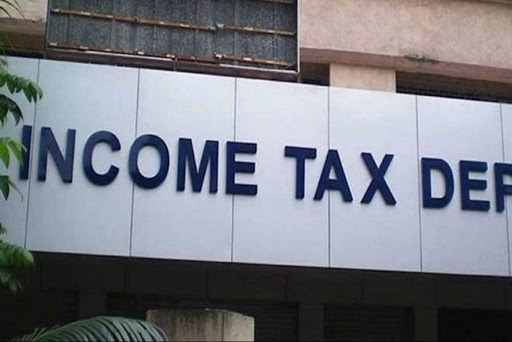
Indian Prime Minister Narendra Modi on Thursday launched a ‘transparent taxation’ platform, among other schemes, aimed at carrying forward the journey of direct tax reforms.
The move brings into effect faceless assessment of taxpayers, faceless appeals and the Rights’ Charter for taxpayers who would not be harassed or treated with suspicion from here on.
Speaking at the launch of ‘Transparent Taxation Honouring the Honest’, Modi said that India is among a few countries giving such rights and dignity to taxpayers. He said that the charter has been introduced with defined rights and responsibilities. From here on, the income tax department cannot doubt anyone without basis, he added.
Modi believes the structural reforms will add a new dimension, adding that these should be policy-driven and holistic. He cited that technology has changed, allowing for the scrutiny process to be distributed randomly. Furthermore, he said that the tax scrutiny rate was reduced by a fourth in the last few years; in fiscal year, there was only 0.26 per cent scrutiny.
Speaking of the recent measures, he said that nearly 300,000 cases were resolved under the Vivaad Se Vishwas scheme. He also appealed to citizens, sayin that those who are capable of paying taxes but not in the tax net should also voluntarily pay dues.
Even though the new ‘taxpayer’s charter’ is aimed at residents, non-resident Indians (NRIs) also will benefit from this proposal. India now joins countries like the United States and Canada, which have fundamental rights enacted under their income tax laws.
“For NRIs, this means less hassles from the tax bureaucracy; now, the taxpayer will know what to expect from the department. The new tax regime has also expanded the scope of faceless assessment and has done away with territorial jurisdiction while substituting individual discretion with team-based assessment,” said Bal Krishen, chairman of Century Financial.
“Many NRIs face problems due to the arbitrary nature in which some income tax officers behave; the new system will prevent this harassment. Nonetheless, the new system does have some drawbacks. For example, if there are complex international financial transactions, it might be challenging for the taxpayer to explain the transaction in the absence of a face-to-face interaction. Only a qualified tax officer will be able to take a well-informed decision and hopefully the entire department will be trained on these aspects. For the NRI, from an overall perspective, the new system is certainly a step forward.”
Dixit Jain, managing director at The Tax Experts DMCC, said: “A lot of transparency will come as there will be faceless interaction with assessees, which will reduce harassment and fair judgement without any manipulation. It will increase confidence; also, more and more people will file tax returns to contribute to the country.”
Jain added that earlier, a lot of NRIs were afraid to file tax returns as they used to think that if they file, they will get notices from the income tax department and will then have to face unnecessary trouble while dealing with officers.
“The introduction of the ‘No Influence’ policy and no face-to-face interaction will encourage NRIs to happily declare their eligible income and pay taxes or claim refunds without any worry. It is a brilliant move by the Modi government to encourage more people to file tax returns so it can contribute to the Indian economy.”
The launch of the Transparent taxation – honouring the honest is based on easing compliance for all taxpayers, more specifically for NRI’s – and is a welcome initiative. Few reforms were already in practice with most of the notice and assessments being conducted under e-proceedings, says Dubai-based Kinjal Bagadia Mehta, chartered accountant and tax consultant.
This initiate will lead to the digitisation of the functioning of the Income Tax department which will eventually eradicate corruption, harassment of the taxpayers and reducing litigation. At present, only the tax department/officer of the city where the PAN of the taxpayer is registered can scrutinise the tax records. By launch of Transparent taxation system, this will change now and with technology, scrutiny will be assigned to tax officers randomly. This will keep changing constantly.
“The idea of honouring honest taxpayers through such a platform will encourage many NRIs to participate in development and growth of India. This will also go a long way in making the tax filing process smoother and easier. A NRI will now be assured of fair, courteous, and rational behaviour from taxman. This people centric and public friendly approach will ease being tax compliant in India ultimately giving confidence to NRIs to file the tax returns, pay tax and also invest in India,” said Mehta.
Source:https://www.khaleejtimes.com/business/global/india-launches-transparent-taxation
