01 May
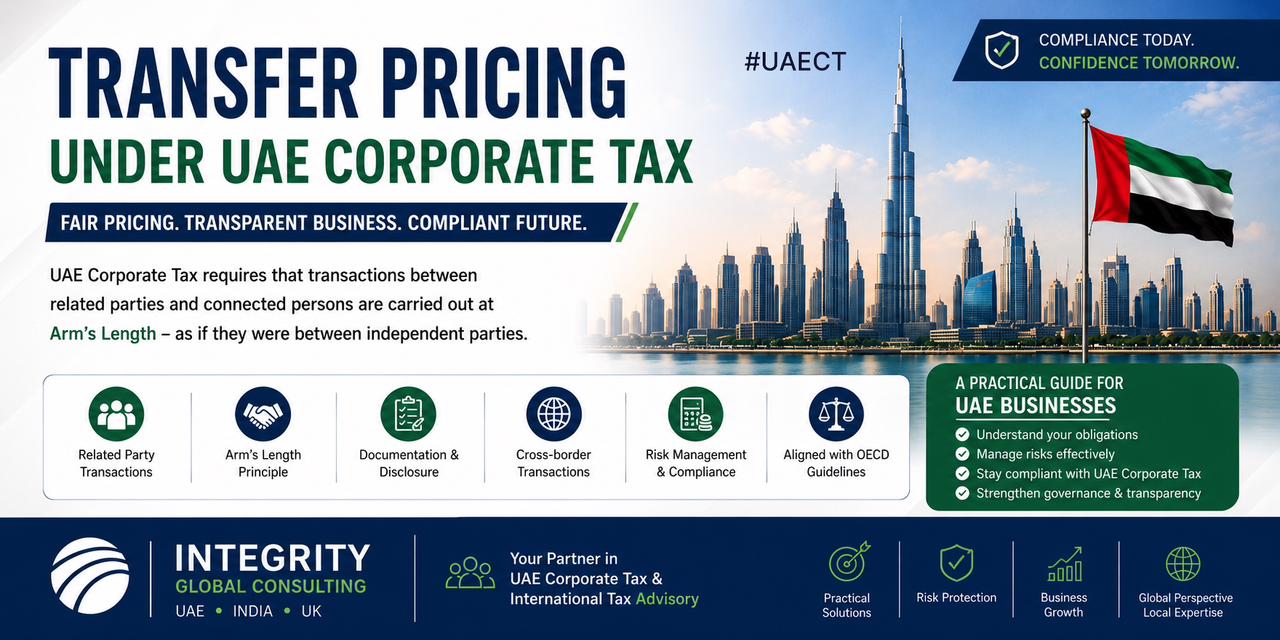
Transfer Pricing under UAE Corporate Tax
Understanding UAE Transfer Pricing Rules under Corporate Tax Law
With the introduction of UAE Corporate Tax, Transfer Pricing (“TP”) has become one of the most important compliance areas for businesses operating in the UAE. Companies dealing with related parties, group entities, shareholders, or cross-border transactions are now required to ensure that such dealings comply with the Arm’s Length Principle under UAE Corporate Tax law.
The UAE has aligned its Transfer Pricing framework with internationally accepted OECD Transfer Pricing Guidelines, bringing the country in line with global tax standards and increasing transparency in related party transactions.
This article explains the fundamentals of Transfer Pricing in the UAE, its applicability, documentation requirements, and practical compliance considerations for businesses.
What is Transfer Pricing?
Transfer Pricing refers to the pricing of transactions between related parties or connected persons. These transactions must be carried out at prices that independent parties would agree upon under similar circumstances.
In simple terms, UAE businesses cannot artificially increase or reduce prices in related party transactions to reduce taxable profits.
Examples of related party transactions include:
- Management fees
- Consultancy charges
- Intercompany loans
- Royalty payments
- Shared services
- Purchase or sale of goods
- Director/shareholder transactions
- Cost allocations between group companies
UAE Transfer Pricing Law and Regulations
Transfer Pricing in the UAE is mainly governed by:
- Federal Decree-Law No. 47 of 2022 on the Taxation of Corporations and Businesses
- Ministerial Decision No. 97 of 2023
- OECD Transfer Pricing Guidelines
The UAE Corporate Tax regime adopts the internationally recognized Arm’s Length Principle, requiring related party transactions to reflect fair market value.
Who is Required to Comply with Transfer Pricing Rules in UAE?
Transfer Pricing provisions apply to:
Mainland Companies
All taxable mainland UAE businesses with related party transactions.
Free Zone Companies
Free Zone entities, including those claiming 0% Corporate Tax benefits, must also comply with Transfer Pricing regulations.
Group Companies
Businesses operating under common ownership or management.
Shareholders and Connected Persons
Payments made to shareholders, directors, owners, or connected persons must be commercially reasonable.
Cross-Border Transactions
International transactions between UAE and foreign group entities are also covered.
Understanding Related Parties and Connected Persons
Under UAE Corporate Tax law, related parties may include:
- Parent and subsidiary companies
- Sister concerns
- Companies under common control
- Relatives and family-owned businesses
- Shareholders and directors
Connected persons generally include:
- Owners
- Directors
- Partners
- Their relatives or controlled entities
Transactions with connected persons may attract scrutiny if they are not properly supported or commercially justifiable.
Arm’s Length Principle in UAE Transfer Pricing
The Arm’s Length Principle is the foundation of UAE Transfer Pricing rules.
This means:
Transactions between related parties should be priced in the same manner as transactions between independent third parties.
For example:
- Intercompany loans should carry reasonable interest rates.
- Management fees must be supported by actual services rendered.
- Shared expenses should be allocated fairly and logically.
The Federal Tax Authority (FTA) may challenge arrangements that appear artificial or tax-driven.
Transfer Pricing Documentation Requirements in UAE
Businesses may be required to maintain proper Transfer Pricing documentation.
-
Transfer Pricing Disclosure Form
Certain businesses must submit a disclosure form along with their Corporate Tax Return.
The form generally includes:
- Related party transactions
- Connected person transactions
- Nature and value of dealings
-
Master File and Local File
Businesses meeting prescribed thresholds may also need to maintain:
Master File
Contains:
- Group structure
- Business overview
- Global TP policies
Local File
Contains:
- UAE entity transactions
- Pricing methodology
- Benchmarking analysis
- Financial information
Common Transfer Pricing Risk Areas in UAE
Intercompany Service Charges
Management and consultancy fees without supporting documentation may be disallowed.
Interest-Free Loans
Related party financing without commercial interest terms may attract adjustments.
Free Zone and Mainland Transactions
Special attention is required where Free Zone entities transact with mainland companies.
Excessive Director or Shareholder Payments
Compensation lacking commercial justification may not be deductible.
Cross-Border Transactions
Foreign withholding tax exposure and Permanent Establishment (PE) risks should also be evaluated.
Practical Transfer Pricing Compliance Tips
Businesses should proactively:
✅ Identify all related party transactions
✅ Maintain written intercompany agreements
✅ Document pricing methodology
✅ Benchmark material transactions
✅ Keep supporting invoices and records
✅ Review shareholder/director transactions annually
✅ Assess cross-border tax implications before entering transactions
Why Transfer Pricing Matters in UAE
Transfer Pricing impacts several areas of Corporate Tax compliance, including:
- Deductibility of expenses
- Taxable profits
- Group structuring
- International taxation
- Audit risk
- FTA compliance
As the UAE Corporate Tax regime matures, Transfer Pricing is expected to become a key focus area for tax audits and regulatory reviews.
Conclusion
The introduction of Transfer Pricing under UAE Corporate Tax marks a significant shift in the UAE’s tax environment. Businesses with related party transactions must now ensure that pricing arrangements are commercially justifiable, properly documented, and compliant with the Arm’s Length Principle.
Early planning and robust documentation can help businesses reduce tax risks, strengthen compliance, and avoid future disputes with the Federal Tax Authority.
Integrity Global Consulting
UAE • India • UK
Your Partner in UAE Corporate Tax & International Tax Advisory
For professional assistance with:
- Transfer Pricing compliance
- Related party transaction review
- Corporate Tax advisory
- TP documentation
- International taxation matters
📩 Contact our team today.
