22 Sep
Dubai creates new authority to improve business services, boost economic growth
Companies and individuals licensed in the economic zones under the authority are exempted from all taxes for 50 years.
A new economic zone authority will be established in Dubai, based on a law issued on Monday by His Highness Sheikh Mohammed bin Rashid Al Maktoum, Vice-President and Prime Minister of the UAE and Ruler of Dubai.
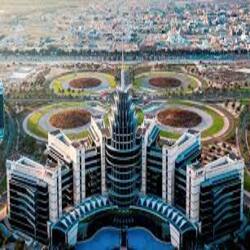
The new Dubai Integrated Economic Zones Authority — an independent legal entity with financial and administrative autonomy — will be supervising the operations of the Dubai Airport Free Zone, Dubai Silicon Oasis and Dubai Commerce City, according to Law No. (16) of 2021.
Sheikh Ahmed bin Saeed Al Maktoum has been appointed chairman of the authority and Dr Mohammed Ahmed Al Zarouni as executive chairman.
The new law and appointment decrees will be published in the Official Gazette and are effective from January 1, 2022.
Sheikh Mohammed bin Rashid said the creation of the Dubai Integrated Economic Zones Authority was part of the emirate’s efforts to raise the speed and efficiency of services for businesses and investors. This, in turn, will help accelerate economic growth.
“The establishment of the Dubai Integrated Economic Zones Authority is a vital move to enhance Dubai’s global competitiveness and raise its investment attractiveness,” the Dubai Ruler said.
“Our objective is to make Dubai the destination of choice for global investors and a major focal point for global commerce.”
The initiative also seeks to consolidate the success of free zones in catalysing growth and adding value to the national economy.
Over 5,000 international firms, covering 20 key economic sectors and employing 30,000 employees from all over the world, will operate under the Dubai Integrated Economic Zones Authority. The economic activity that will be regulated by the authority generates five per cent of Dubai’s GDP.
Tax exemptions
Companies and individuals licensed in the integrated economic zones under the authority are exempted from all taxes — including income tax — for 50 years, effective from the date of the new law. This exemption period can be renewed for a similar period through a decision issued by the Dubai Ruler.
All subsidiaries of the Dubai Integrated Economic Zones Authority and companies or individuals licensed by the authority are exempted from restrictions on repatriation of capital, profits and salaries in any currency and to any destination outside its zones. This exemption is valid for 50 years, renewable for a similar period by a decision issued by the Dubai Ruler.
Furthermore, the funds of licensed companies and their employees will not be subject to nationalisation or restricted ownership.
Key priorities
“Our focus is on integrating government processes and facilitating greater access to global markets through an accelerated transition to a digital environment,” Sheikh Mohammed said.
One of the authority’s key priorities is to attract local and international companies to set up their headquarters in integrated economic zones of the emirate.
It seeks to promote Dubai’s economic competitiveness, especially in retail, technology, Islamic economy, e-commerce, industrial, logistics and shipping sectors.
It also aims to support SMEs and drive entrepreneurship and innovation across sectors.
The authority is tasked with creating, developing and managing the infrastructure and administrative services of integrated economic zones, and regulate business activities and services, including the import and storage of merchandise.
Partnership with private sector
Sheikh Mohammed highlighted that the private sector is a major partner in Dubai’s development journey over the next 50 years.
“We remain committed to strengthening our partnership with the private sector and making our business environment more attractive, both of which are key to sustained growth in our new phase of development,” the Dubai Ruler said.
The new law will support integrated economic zones in enhancing growth; diversifying investment opportunities; and improving the ease of doing business.
Source:https://www.khaleejtimes.com/business/dubai-creates-new-authority-to-improve-business-services-boost-economic-growth

02 Sep
India’s FTA talks with UAE ‘progressing fast’
Besides the GCC, India is conducting FTA-related talks with the UK, Australia and the European Union
India’s revived discussions for concluding a Free Trade Agreement (FTA) with the UAE and other GCC countries are “progressing fast” and will enable the country to become a global trading hub, according to Piyush Goyal, the Minister for Commerce, Industry and Consumer Affairs.
Addressing a large cross-section of India’s business through the platform of the Jain International Trade Organisation, Goyal cited the UAE specifically as among the countries with which his Ministry is engaged in talks towards reaching an FTA.
Besides the GCC, India is conducting FTA-related talks with the UK, Australia and the European Union.
The India-GCC FTA talks, which started in 2004, were suspended in 2008, but with the active involvement of the UAE, they were revived again recently as both countries expect to see the two-way trade crossing the $100 billion-mark in the coming years from the current $60 billion given the stronger bilateral engagements in the wake of state-level visits by leaders of both countries. However, now the UAE and India have decided to work on a separate free trade pact as it would not need as much coordination.
The UAE is still the third-largest trading partner of India despite a dip in both exports and imports in 2020-21 due to the pandemic. India’s exports to UAE last fiscal were valued at $16.7 billion while imports from the country were at $26.6 billion. Nearly 8.0 per cent of India’s oil is also sourced from the UAE.
Home to 3.4 million Indian expatriates generating the highest remittances from abroad, the UAE is also among the top 10 investors in India with an estimated $11 billion in investments, more than half of which is in the form of foreign direct investment (FDI).
Goyal said the pace of discussions has now gathered speed. Traders and exporters are the “twin pistons powering the economic growth engine of India. We firmly believe in the capabilities of the business community as well as of start-ups.”
The FTAs will enable India to become a global “trading hub,” Goyal hoped.
The Jain International Trade Organisation is conducting a 12-day virtual expo with the participation of several thousand businesses and entrepreneurs.
An Indian government official has said India had revived the FTA talks with the UAE, its third global trading partner, with expectations of a larger pact with the other GCC countries taking place subsequently.
“As the UAE has been very keen to advance an FTA between India and the GCC, which has been pending for a long time, the two countries decided to first go ahead and work out a deal amongst themselves,” the official was quoted as saying. The initial talks have started on a virtual mode.
He said the GCC is of both economic and strategic interest to India as it had emerged as one of the largest trading partners. Its substantial oil and gas reserves is also of great importance for the country’s energy needs. Moreover, it is a source of increased foreign investments into India.
In FY21, India imported goods worth $80.5 billion from GCC countries, while exports amounted to $40.5 billion. About half this trade is with the UAE.
A Framework Agreement on Economic Cooperation between India and the GCC was signed in 2004 that provided for both parties to consider ways and means to extend and liberalise trade relations besides initiating discussions on the feasibility of an FTA. Two rounds of negotiations were held —in 2006 and 2008. The movement of natural persons is one of the four ways through which services can be supplied internationally. It includes the movement of natural persons such as independent professionals and is of key interest to India in its global trade relations.
India stands to gain in services as well and could push for long-term business visas with the UAE, experts said.
“We have a geographic advantage with that region and a lot of business travel happens. Long-term business visas will be beneficial for India,” said an expert on trade issues.
Easier movement of professionals, called Mode 4 in trade parlance, could also be among India’s demands, the expert said.
Source:https://www.khaleejtimes.com/business/economy/indias-fta-talks-with-uae-progressing-fastrsquo
04 Aug
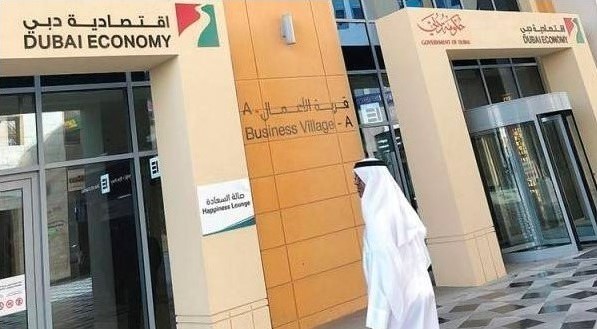
Dubai Economy fines 148 businesses for not registering Beneficial Owner data
The Commercial Compliance & Consumer Protection (CCCP) Sector in Dubai Economy has imposed fines on 148 companies in the emirate that did not register their Beneficial Owner data by June 30, 2021 as was required by law. Violators will have to pay a fine of Dh15,000 each.
The disciplinary measure being adopted now follows an intensive awareness campaign that was launched across traditional and digital media to educate companies in Dubai on the importance of registering their Beneficial Owner data in the commercial registry in accordance with the UAE Cabinet Decision No: (58) of 2020, as well as the relentless efforts of Dubai Economy to uphold global best practices in doing business.
Dubai Economy has also called on companies registered in Dubai to provide their Beneficial Owner data on its eServices page or via the call centre.
Source:https://www.khaleejtimes.com/business/dubai-economy-fines-148-businesses-for-not-registering-beneficial-owner-data
03 Aug
Digitisation, talent, future of work are key investments for organisations
Organisations that are looking to achieve sustainable growth over the coming years will need to prioritize their digitisation initiatives, talent drives, and future of work policies, new research by the Boston Consulting Group (BCG) has shown.
The report, titled ‘Creating People Advantage 2021: The Future of People Management Priorities’, noted that HR leaders need to have a clear set of objectives on which to concentrate their efforts, especially as the post-pandemic era approaches and workplace environments undergo rapid change.
“No matter the vertical in which they operate, every company today shares a common goal – building a workforce and workplace capable of thriving well into the future,” said Dr. Christopher Daniel, managing director and partner, BCG Middle East: “To create and capture such success, organizational strategies must be implemented without delay, frameworks that consider different aspects and deliver on internal priorities.”
The authors surveyed 106 UAE respondents – 64 per cent of which currently hold HR positions – with 57 holding managerial or senior managerial positions at leading companies and startups nationwide. When it comes to identifying areas where innovative action is essential, the report pointed to digitisation, including the implementation and continuous use of new technologies such as people analytics, cloud-based applications, AI, and robotics.
This was followed by talent, comprising strategic workforce planning, leadership development, upskilling and reskilling, and working with an ecosystem of employees, contractors, and other types of labor. Crucially, UAE respondents ranked future importance of talent ecosystem management much higher in comparison to the global average. Lastly, the report identified the future of work, including more agile HR, and the incorporation of smart work, and change management as crucial to sustainable growth.
“Companies today must navigate an exceedingly challenging business environment and strong, proactive people management is the only way to ensure that companies have the right talent in place to succeed,” said Bob Morton, president of the World Federation of People Management Associations, and a coauthor of the report. “A data-driven, objective approach that places people at the front and center of work can help HR leaders allocate scarce resources to the most urgent priorities.”
Another key finding in the report is the need to create personalised experiences for employees. Many UAE survey respondents reaffirmed their belief that focusing on employee needs and expectations is a key success factor in the intensifying competition for talent, underscoring the importance of an employee-centric approach with a strong emphasis on implementing digital tools that offer a seamless, personalized experience and ensure daily tasks are made easier.
In addition, clear concepts for how best to organise remote work, actively incorporating and addressing the needs and aspirations of employees are also important. Lastly, business leaders must also demonstrate genuine appreciation for employees and actively engage with them through, for example, personalized ‘thank you’ messaging in light of work-related achievements.
Source:https://www.khaleejtimes.com/business/local/digitisation-talent-future-of-work-are-key-investments-for-organisations
