23 Feb
Dubai Economy issues 4,692 Instant Licences since 2017
Facility provides convenient model for businessmen who can now obtain a commercial licence within 5 minutes
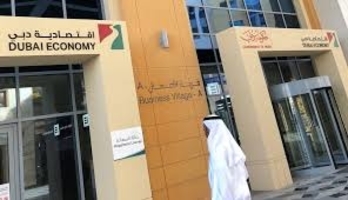
The Business Registration and Licensing (BRL) sector at Dubai Economy reported that 4,692 Instant Licences were issued since the launch of the service in July 2017 to date.
Among the Instant Licences issued, 3,448 were in the commercial (73.5 per cent) and 1,244 were professional (26.5 per cent) categories.
The Instant Licence service provides a convenient model for businessmen who can now obtain a commercial licence within five minutes, enabling them to establish and conduct business in Dubai easily. The initiative is a path-breaking service whereby businesses can secure their commercial license in one-step for the first year without having a company’s lease or location.
Through the Instant Licence, Dubai Economy seeks to highlight the sustainable economic development and competitiveness of the emirate.
All business activities can benefit from the service, except public and private shareholding companies, through eServices (ded.ae/instant), the various outsourced service centres in Dubai, or the Happiness and Smart Lounges.
Holders of general trade licences can only use electronic services. All business partners or one of them must be present while applying through the outsourced service centres or the Happiness Lounge and must provide a valid passport copy of all parties (partner and manager), residence visa copy and no-objection letter from the sponsor to the foreign parties.
The Instant Licence offers the option of an electronic memorandum of Association (eMOA), in addition to obtaining the license and entry in the Dubai Economy commercial registry.
Furthermore, the licencee is given membership in the Dubai Chamber instantly, an establishment card of the General Directorate of Residency & Foreigners Affairs as well as three work permits for employees from the Ministry of Human Resources & Emiratisation once the trade license is issued.
‘Native’ workers registration
The registration of ‘Native’ workers in the Ministry of Human Resources and Emiratisation is done while issuing the Instant Licence. If the partners wish to appoint the employees before the issuance of the Instant Licence, they need to follow a few simple steps or else skip the screen and complete the procedures.
The number of Instant Licence owners reached 16,935 and 87.6 per cent (14,842) of them are men while women account for 12.4 per cent (2,093). The businessmen who secured Instant Licences so far include those from Britain, Turkey, Saudi Arabia, India, China, Pakistan, Egypt, Jordan and Sudan.
An Instant Licence can be obtained for four legal forms of businesses – limited liability company (LLC), single member LLC, sole proprietorship and civil company.
The Instant Licence initiative has also contributed to the sub-indicator ‘Starting a business’ in the Ease of Doing Business Index 2020 issued by the World Bank, which ranked the UAE 17th globally.
Source:https://www.khaleejtimes.com/business/local/dubai-economy-issues-4692-instant-licences-since-2017
19 Feb
Dubai businesses more upbeat on improving market conditions
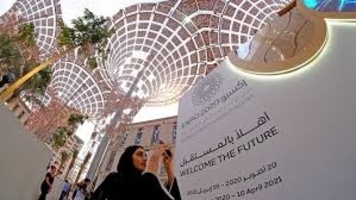
With the Expo 2020 and a big surge in the inflow of tourists expected to revitalise commercial activity, businesses in Dubai are getting more upbeat on improving market conditions and strong prospects for international reach, Dubai Economy said.
The quarterly survey of Dubai Economy showed that the proportion of firms anticipating improvement in business situation in the first quarter of 2020 has increased to 60 per cent, from 58 per cent for the previous quarter, with the Expo 2020 and tourist arrivals expected to energise commercial activity.
In a statement, Dubai Economy said while softer demand, lower margins and less projects have had an impact in the last quarter of 2019 when 19 per cent businesses rated their performance as below par, the first quarter of 2020 is expected to bring in new purchase orders, increased volumes and more jobs.
Ali Ibrahim, deputy director-general of Dubai Economy, said the prevailing sentiment showed businesses in Dubai continue to go past challenges and make the best use of opportunities available to target new customers and markets.
“Initiatives to reinforce Dubai as a gateway and enhance ease of doing business have had a significant impact on overall economic activity in the emirate and particularly on trade and tourism,” he said.
“While the Dubai Industrial Strategy 2030 has energised the domestic manufacturing sector and diversified exports out of Dubai, local firms see an unprecedented opportunity for international exposure in the Expo 2020,” said Ibrahim.
He said exporters targeting new markets and SMEs enhancing their competitiveness are particularly significant in the context of the external orientation and innovation focus of Dubai’s economy.
Businesses in Dubai also count on the Expo to improve their credibility and relations with international companies, thus opening up opportunities for growth and exports. Exporters are slightly more optimistic than the overall business community with composite Business Confidence Index (BCI) scores of 128.8 points and 125.6 points, respectively.
The survey shows that among 70 per cent of the respondents who stated that they have expectations about Expo 2020, 56 per cent expect rise in commercial activity, 20 per cent expect improvement in business/market conditions, 14 per cent expect increase in visitor activity and seven per cent foresee increase in construction activity.
Economists and analysts argue that a host of proactive initiatives, reforms and incentive projects have been positively impacting the investment climate of Dubai, leading to enhanced consumer confidence in the economy.
Analysts see a rebound business optimism surrounding future output with corporates looking to the upcoming World Expo in 2020. They expect the overall economic momentum to be higher, spurring real GDP growth. The official economic outlook for Dubai foresees 3.2 per cent growth in 2020 and 3 per cent in 2021.
MUFG Bank economists expect Dubai to witness a rebound in economic growth this year due to a confluence of factors including, stronger corporate activity, higher real estate prices and renewed business optimism. S&P Global has predicted that Dubai’s GDP would increase at about 2.5 per cent a year until 2022 and much of the increase could come from economic activity associated with Expo 2020.
According Dubai Economy survey, projection for volumes has displayed a year-on-year (y-o-y) increase, with net balance increasing from 47 per cent for first quarter, 2019 to 53 per cent for first quarter, 2020, as businesses expected improvement in economic & business conditions and seasonal demand. “A stronger forecast for volumes has resulted in a more optimistic outlook for profits, with 62 per cent of firms expecting net profits to increase in first quarter, 2020 as compared to 54 per cent for first quarter, 2019.
Despite competitive pressure, firms are optimistic about the level of selling prices for the upcoming quarter.
Hiring intentions have improved on a quarter-on-quarter basis to meet the expected rise in demand, with net balance increasing from 14 per cent for fourth quarter, 2019 to 16 per cent for first quarter, 2020.
Manufacturing sector is more confident about its business prospects for parameters like wage levels, sales revenue, volumes, profits and hiring as compared to services and trading sectors. Within manufacturing, the metal segment is most optimistic about volumes for Q1, 2020, registering a net balance of 75 per cent, supported by expected improvement in business conditions and demand, ahead of Expo 2020. In the trading sector, food & beverages and textile segments are most optimistic about volumes for the upcoming quarter.
Within services sector, tourism & hospitality (hotels & restaurants, travel and car rentals) and transportation segments are optimistic about volumes and expect better market conditions in the upcoming quarter.
Source:https://www.khaleejtimes.com/business/local/dubai-businesses-more-upbeat-on-improving-market-conditions

13 Feb
Simplification of tax system will help India economy on long-term basis: Analysts
Dubai – India’s 2020-21 budget was quite balanced and simplification of tax regime announced in the latest budget will help the economy on a long-term basis, say analysts.
While addressing the Indian Union Budget 2020 conference held in Dubai on Monday, they said markets and investors should look at the Indian economy over the long-term basis – five to 10 years or beyond.
Tushar Pradhan, chief investment officer at HSBC Global Asset Management in India, said the budget set direction towards simplified tax regime which is in line with the country’s bid to be a $5 trillion economy.
“Every individual or corporate should be part of the tax net and that is going to propel economy. Simplification is a big step. Some have argued that alternative tax regime is more confusing then before but we have to take it with a pinch of salt,” he said while addressing the forum, which was organized by The Indian Institute of Chartered Accountants (ICAI) – Dubai chapter.
He noted that divestment target of Rs2,100 billion is too ambitious and the next year will be really tough one to meet fiscal deficit to match.
Paras Shahdadpuri, chairman of Nikai Group, said the market was expecting some sops for the industries but it was missing in the budget.
“There was a lot of expectations built around the budget, expecting some big bang and fireworks. But it didn’t happen. Therefore, industry was disappointed. But, overall, budget is good as it did provide some stimulus,” he added.
Anish Mehta, chairman of ICAI’s Dubai chapter, said the government aimed to give more disposable income in the hands of individuals by introducing new tax slab under simplified regime in the budget.
“People, now, can choose between old and new tax slab depending on their savings appetite or not claiming various exemptions. However, this will discourage forced savings by individuals which is essential for sound financial position in times of crisis. Another measure which will impact the tax is taxing dividend distribution in the hands of the recipient rather than corporate. This may be beneficial to some but disadvantageous to tax payers who are in higher income group,” he added.
He said people were expecting some relaxation on exemption of tax on long-term capital gains which could not find place in the budget 2020. “This could have boosted investments in capital market.”
Anurag Chaturvedi, secretary of ICAI’s Dubai chapter, sees it as a balanced budget with respect to an individual increased slab-based rates and options to opt new scheme of tax.
“Abolition of dividend distribution tax is bigger reform by the government. However, capitalists will have to bear burden of increased tax slab rates, additionally bringing stateless persons in to tax net and introduction of deemed residency provisions will impact NRI in general. It will force them to choose a tax domicile (Tax Resident of any country) outside India to avoid taxing global income in India,” Chaturvedi said.
Source:https://www.khaleejtimes.com/simplification-of-tax-system-will-help-india-economy-on-long-term-basis-analysts

08 Feb
UAE startups rising
UAE, Egypt and Saudi Arabia emerge in top three for Mena startups
The UAE is known to encourage entrepreneurs to unlock the potential that the nation has to offer them in fulfilling their business aspirations.
The recent reforms introduced by the wise leadership of the country to boost confidence among startups also proves that the ecosystem has matured, and is now expanding its reach in the region, with Egypt and Saudi Arabia complementing the growth.
The latest report from Magnitt indicates that the number of investments in Mena-based startups was up 31 per cent in 2019, with 564 investments and $704 million in total funding, up 13 per cent compared to 2018, excluding previous mega-deals in Souq and Careem.
“With exits at an all-time-high, including the Mena region’s first unicorn exit, the region’s founders, investors, and governments are seeing the returns on their efforts in the tech venture space,” said Philip Bahoshy, founder and chief executive, Magnitt.
In 2019, Egypt, for the first time ever, accounted for the largest number of deals in Mena with a jump of 25 per cent, while the UAE accounted for the lion’s share of total funding and a surge of 60 per cent.
Egypt is the largest and most promising startup hub of the Mena region. The government has been working very hard to open up opportunities for foreign investments. Rainmaking is working with Egyptian entrepreneurs and local ecosystem players since 2014 and has engaged more than 150 startups, provided support to almost 900 founders, and worked with nearly 70 local partners so far.
So how do Egypt and the UAE complement each other in the startup space? “Egypt provides an extensive pipeline of startups, entrepreneurs and talents, while the UAE offers significant availability of infrastructures and funding. Together, Egypt and the UAE could build an active alliance to drive innovation in the region and export innovation globally from the UAE,” said Ahmed El Sherif, managing director at Rainmaking Innovation Egypt.
“We expect a big spurt of funds to support startups over the next three to four years. In terms of industries, we are recording the greatest interest from local corporations into innovation investments in the fintech, insurtech, tourism, healthcare, industrial sectors, and impact industries.”
Similarly, Saudi and the UAE complement each other a lot in the startup space. “The UAE has leapfrogged in innovations, bringing in international investors, and taking away the lead, but Saudi is already catching up,” says Taha Sajid, chief technical consultant, Limar Global Tech.
“I have not come across any one business startup, who have started in either of these countries but not have their eyes on the other; Saudi for the investment perspective and the UAE for getting market exposure. It is due to the fact that in order for startups to grow, they need to have a proper ecosystem, have market adoption, get the investment for liquidity, loyal customers, all of these things are possible if you are not only restricted to one jurisdiction. Apart from less travelling distance, they share the same cultural/religious/traditional aspect and even the resources ethnicity, like most people belong to Mena, India, and Pakistan, they understand each other well, which makes them complement each other,” added Sajid.
Saudi Arabia will emerge as a popular startup hub in the Mena region; the main reason is the cultural change through the national transformation drive of Vision 2030 and the ease of doing business with the direct involvement of the Saudi government through its proper structure.
“Any startups, whether local or international, if the idea is appealing and suits the local market, will get the proper guidance through different bodies. If there is a fintech startup, regulations have clarity in terms of business activities that need to be regulated or not and how SAMA and CMA are interrelated. Secondly, there is a separate framework for local and international entrepreneurs with the proper step and process flow. All this process is being driven by the Ministry of Commerce and Investment, supported by incubators like Badir and facilitators like Fintech Saudi. On the other hand, if you are an IT startup, there is digital transformation hub driven by the Ministry of communication and IT, so all the bases are covered when it comes to supporting startups,” said Sajid.
Innovation remains top of the agenda for many governments from across the region. According to Magnitt, Hub71 in Abu Dhabi was created to spur innovation in the capital with $250 million in funds to support regional and international startups scale in the region. Moreover, also Saudi Arabia has seen a shift in policy. Multiple initiatives have eased the ability of startups to enter the country, access education and scale within the Kingdom. Only recently, the Public Investment Fund (PIF) announced a $1billion Fund of Funds (FoF) to spur venture investments.
Egypt, given its scale and educational system, remains a key hotbed of innovation, with many early- stage companies and founders solving big market issues that are local to them. “Dubai, with a first-mover advantage, continues to assess how best to encourage and foster the startup ecosystem with new legislation and support, including golden visas for founders to help develop its ever-evolving ecosystem,” added Bahoshy.
Source:https://www.khaleejtimes.com/business/local/uae-startups-rising
