13 Aug
FTA clarifies VAT application for e-commerce
The UAE’s e-commerce has been growing exponentially over the last few years.
The UAE’s Federal Tax Authority (FTA) on Wednesday further clarified that though five per cent value-added tax (VAT) will be applicable to general e-commerce purchases however there are a number of special rules that apply specifically to e-commerce transactions.
It said the tax will also be applicable on digital services including supply of domain names, web hosting and remote maintenance programmes and equipment, software, images, text and information provided electronically such as pictures, screen savers, electronic books, documents and other digitised files such as music, movies and games on demand and online magazines.
Other services identified under the banner of “electronic services supplies” include the supply of advertising space on a website and the rights associated with that advertisement, and political, cultural, artistic, sports, scientific, educational or entertainment broadcasts, including broadcasts of events, live streaming via the internet, the supply of distance learning services, and services of any equivalent type that have a similar purpose and mission.
The growth of e-commerce sector picked up even further in the wake of coronavirus pandemic with UAE residents on average spending over Dh6,000 a year.
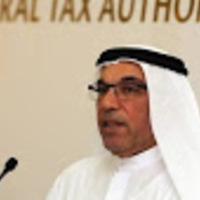
“In light of the increasing importance of the e-commerce sector, clear mechanisms for procedures have been identified. Value-added tax, as it relates to the supply of goods and services through electronic means, contributes to supporting the activities of this vital sector, which depends on a locally developed digital and technological infrastructure,” said Khalid Ali Al Bustani, director-general of FTA.
It added that taxable persons should charge VAT to customers when supplying taxable goods or services at the standards rate of 5 per cent or at a rate of zero per cent where law permits. If the supplies are exempt from tax, these supplies are not treated as a taxable supplies and therefore no VAT needs to be charged on these supplies.
Anurag Chaturvedi, CEO of Chartered House, said many international service providers, who do not have place of establishment in the UAE, are still unaware of the registration requirement for VAT in the UAE when they provide services to the UAE consumers.
As per the Article (18) of Decree Law, a non-resident shall register for tax and makes supplies of goods or services, there is no threshold limit applicable to the non-residents. “This means if a consumer in the UAE buys a service/product from an online platform (social media, e-commerce, education, games, arts, fashion, music or any other services), the non-resident shall register for the VAT within the stipulated time and comply with local tax legislation,” added Chaturvedi.
As per the UAE legislation, the place of supply of electronic services shall be UAE if the use and enjoyment of the supply is within the country. Pursuant to Article (31) of the Decree law, provision of electronic services are subject to tax.
“If Netflix is being used by an end-user in the UAE, the service is subject to tax in the UAE. Many international service providers, who do not have place of establishment in the UAE, are still unaware of the registration requirement for VAT in the UAE when they provide services to the UAE consumers,” added Charuvedi.
Source:https://www.khaleejtimes.com/fta-clarifies-vat-application-for-e-commerce
25 Jul
Saudi Arabia Explores Asset Sales, Income Tax to Boost Finances
Saudi Arabia is accelerating plans to sell off state assets and isn’t ruling out introducing income tax as the kingdom seeks to boost state coffers hit by the slump in oil prices.
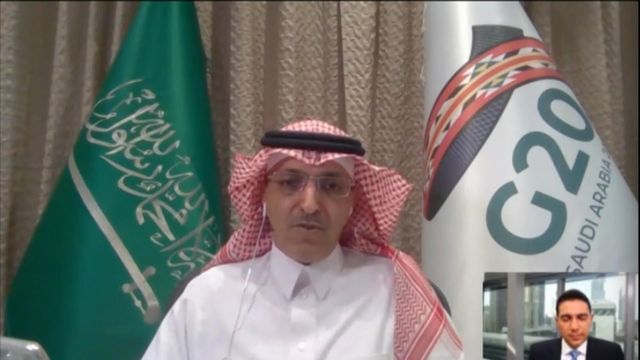
The world’s biggest oil exporter could raise more than 50 billion riyals ($13.3 billion) over the next four to five years by privatizing assets in the education, health-care and water sectors, Finance Minister Mohammed Al Jadaan said Wednesday during a virtual forum organized by Bloomberg.
The government is “considering all options” to bolster its finances and while income tax isn’t “imminent” and “would require a lot of time” to prepare, the kingdom “isn’t ruling anything away for now,” he said.
The state-run Saudi Press Agency later reported citing an unidentified official source as saying that income tax had not been discussed in the cabinet or any of the government councils or committees.
Saudi Arabia has been taking steps to shore up its economy from the double whammy of the coronavirus and lower crude prices. The economy is set to shrink 6.8% this year, according to the International Monetary Fund, in what would be the deepest contraction in over 30 years.
The government has already taken unprecedented measures to support its finances, including tripling value-added tax, increasing import fees, and canceling some benefits for government workers. The kingdom has traditionally been tax-free for individuals, with oil revenue supporting a wide range of subsidies and benefits for citizens.
‘Not Austerity’
“Saudi Arabia is not in austerity and we are not getting into an austerity phase,” Al Jadaan said. While the government has “re-allocated some spending,” total spending in 2020 is likely to be more than a trillion riyals, as planned.
The kingdom is also likely to have to borrow about 100 billion riyals more than planned this year and plans to tap the global debt market at least one more time in 2020 after so far selling $12 billion in international bonds in 2020, Al Jadaan said.
Read More: Saudi Response to Fiscal Shock Centers on Record Debt Plan
As well as raising debt, the kingdom has already been selling state assets as part of efforts to diversify its economy away from oil after a slow start. In December, the government sold a $29 billion holding in energy giant Saudi Aramco through the largest initial public offering in history. It also recently sold a stake in two grain mills for $740 million.
Despite its efforts to contain costs, the government also transferred $40 billion from reserves held by the central bank to boost the financial firepower of its sovereign wealth fund for deals. The Public Investment Fund has already acquired stakes in companies including Citigroup Inc., Facebook Inc. and concert promoter Live Nation Entertainment Inc.
The sovereign fund will continue to boost its global investments, Al Jadaan said.
Source:https://www.bloomberg.com/news/articles/2020-07-22/saudi-arabia-could-raise-billions-of-riyals-from-asset-sales?utm_source=url_link
03 Jul
Coronavirus: UAE among most active countries in Middle East in providing economic incentives
The incentives include a monetary expansionary policy and a support plan by the Central Bank of the UAE.
The Ministry of Economy has said that the UAE is among the most active countries in the Middle East and North Africa in providing financial and cash incentives to support its markets, banks and economic activities in recent months.
In its recent study, the ministry explained that the incentives and measures launched by the country have been diverse in terms of concerned authorities and beneficiaries.
The authorities providing such incentives include federal and local authorities, and beneficiaries are not limited to official economic entities and large private companies but are also individuals, entrepreneurs and small and medium-sized enterprises, it added.
The incentives include a monetary expansionary policy and a support plan by the Central Bank of the UAE, as well as incentives presented by the Federal Government to support economic activities, and incentives provided by the local governments of every emirate.
In its study, the ministry presented recommendations and initiatives suggested by the “Cooperation and Economic Development Committee” to support various sectors, including an initiative aimed at reducing telecommunications fees and information costs by 50 percent or to cost price.
The recommendations also include continued economic and financial support for economic sectors after 2020, and regularly revising economic packages provided to various entities.
Source:https://www.khaleejtimes.com/coronavirus-pandemic/coronavirus-uae-among-most-active-countries-in-middle-east-in-providing-economic-incentives
28 Jun
District 2020 partners with Dubai SME and MBRIF to support start-ups
The latest announcement is part of District 2020’s mission to stimulate lasting economic benefits and industry growth in the UAE.
Dubai SME and the Mohammed bin Rashid Innovation Fund (MBRIF) will further support start-ups and small businesses in the UAE via partnerships with District 2020’s global entrepreneur programme, Scale2Dubai.
In line with Dubai and the UAE’s proactive approach to supporting small and medium enterprises (SMEs) and the important role they play in the country’s resilient economy, the strategic partnerships will provide Scale2Dubai with a pipeline of high-potential start-ups and small businesses.
Marjan Faraidooni, Chief Pavilions and Exhibitions Officer, Expo 2020 Dubai, said: “These milestone agreements with Dubai SME and MBRIF will further bolster the continued growth of the UAE’s start-up ecosystem and contribute to a stronger and resurgent economic environment.
“The advance towards a more connected future continues to gain pace, and new opportunities will emerge from the current set of global challenges that SMEs and start-ups currently face. Through the combined efforts of partnerships with both these organisations, Scale2Dubai and our wider District 2020 ecosystem support a crucial sector of the UAE economy and complement other accelerators and incubators around the country.”
Expo 2020, which will run from October 1, 2021 to March 31, 2022, will showcase the best examples of collaboration, innovation and cooperation from around the world and help reinvigorate the global economy as it gathers some of the greatest minds from around the world to seek solutions to the most pressing challenges of our time.
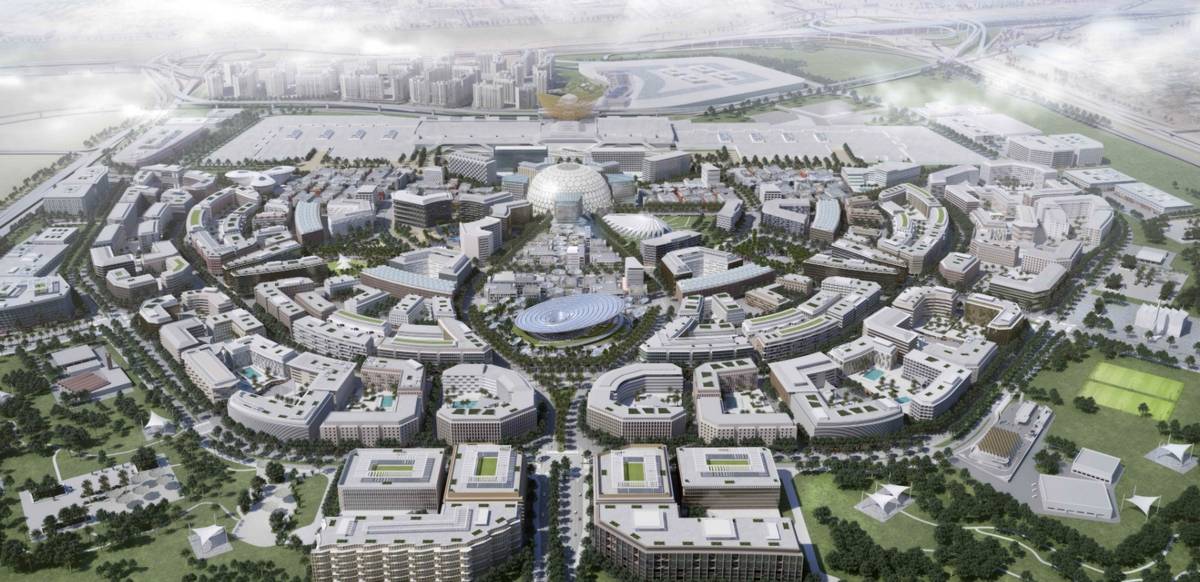
District 2020, with a mandate to support industry growth, will evolve over a nine-month transition period after the event ends, during which more than 80 per cent of Expo’s built environment will be repurposed. It will transition into a mixed-use community and innovation ecosystem that will contribute to Dubai’s position as a leading innovation hub. It will also carry forward Expo 2020’s mission of stimulating business opportunities and continue to support start-ups and SMEs that are integral to the UAE economy.
The new agreements mark an important step towards District 2020’s vision for a curated innovation ecosystem. The partnerships will enable start-ups and small businesses to be part of the Scale2Dubai programme and access the District 2020 platform from which they can expand locally and internationally, while also offering them the opportunity to connect with large enterprises and receive access to funding and other growth enablers.
“Since its launch in 2002, Dubai SME has launched several programmes and initiatives to support entrepreneurs and promote the innovation ecosystem in the UAE. As we are an institution dedicated to supporting the establishment and development of innovative start-ups, our vision closely aligns with that of District 2020,” Abdul Baset Al-Janahi, CEO of Dubai SME, commented.
“We will work on qualifying innovative national projects from the members of our Hamdan Innovation Incubator as well as from the different countries participating in our ‘Innovation Attraction Programme,’ to strengthen District 2020 as a platform for start-ups to grow regionally and access international markets,” Al Janahi added
Scale2Dubai was launched in February 2020 and offers successful applicants a range of benefits such as two years’ free working space in District 2020, support in visa and business set-up, two years’ subsidised urban living and access to funding.
The Scale2Dubai programme builds on Expo 2020 Dubai’s aim to support the SME and start-up sector, a driver of the UAE economy. As of the end of March 2020, Expo 2020 had awarded more than Dh4.6 billion to SMEs.
This latest announcement is part of District 2020’s mission to stimulate lasting economic benefits and industry growth in the UAE. After Expo 2020 ends on March 31, 2022, District 2020 will evolve over a nine-month transition period, repurposing more than 80 per cent of Expo’s built environment.
Scale2Dubai is currently accepting expressions of interest in the programme through the District 2020 website.
