
11 Sep
UAE firms can now obtain bank loans against moveable assets as collateral
Ministry of Finance also announces creation of electronic registry to record assets to ensure project financing.
Companies in the UAE, especially small and medium businesses, can now secure bank loans by using their moveable properties as collateral in order to help them meet their cash-flow needs amidst tough situation due to the pandemic.
The UAE has issued Federal Law No.(4) of 2020, which expands the scope of including more assets that can be used as collateral and through other amendments that improve enforcement in the case of defaults.
Generally, small businesses find it tough to secure bank loans due to their size and lack of financial history.
The law will also strengthen the UAE’s competitiveness, ease of doing business ranking and attract more foreign direct investment.
Younis Haji Al Khoori, Under-secretary at the Ministry of Finance, also announced the creation of an electronic registry to record assets to ensure project financing. This register would allow the use of “tangible and intangible” moveable properties such as equipment and tools, receivables, cash flows, crops and others as collateral against obtaining loans.
He stressed that the law will have a significant positive impact on the nation’s economy, as it caters to recent developments in the scope of movable properties.
“This law will improve the ability of financial institutions to expand lending operations, and regulate current practices associated with them. It also addresses the associated risks, and regulates the relationship between banks, institutions and companies, to ensure the rights of all parties,” he added.
He pointed out that the provisions listed in this law cover most of the World Bank’s indices included in the Doing Business Report.
Source:https://www.khaleejtimes.com/business/local/uae-firms-can-now-obtain-bank-loans-against-moveable-assets-as-collateral–
02 Sep
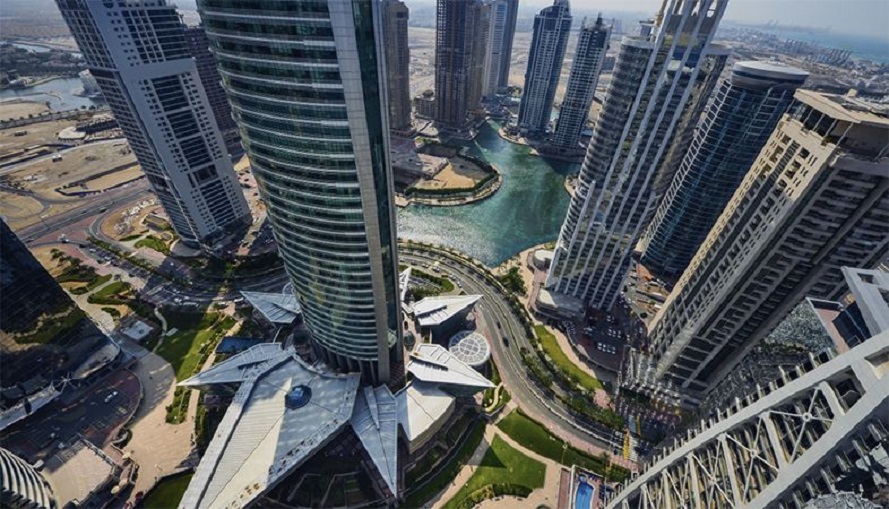
DMCC, Emirates NBD partner to boost ease of doing business in Dubai
DMCC has announced an agreement with Emirates NBD to offer existing and new DMCC member companies the opportunity to spread out payments for DMCC services over multiple instalments using their credit cards at a zero per cent interest rate.
The instalment plan offers existing and new members the flexibility to convert DMCC payments for company set-up, renewal or any other service-related fees into three, six or 12-month instalment plans with no interest charges. The service is available for DMCC customers when using any Emirates NBD credit card issued to individuals or corporates, with a minimum payment of Dh500.
The partnership offers over 17,500 DMCC member companies the benefits of making ongoing routine payments conveniently, providing liquidity and financial flexibility. The offer will also assist new companies to make setup related payments in a more manageable way and at no additional cost. Customers using individually issued credit cards can conveniently convert their payments by using the mobile app or online banking as well as through push and SMS messaging while corporate cardholders can get in touch with their relationship manager or contact the bank’s call centre to request for the same.
Ahmad Hamza, executive director – Free Zone, DMCC, said: “Supporting our business community throughout the past few months has been our top priority, and will remain so as we enter this new phase of reopening and recovery. Our partnership with Emirates NBD, alongside the extended and enhanced DMCC Business Support Package, is set to boost Dubai’s economic resilience at this critical time and ensure that the Emirate remains the chosen place for doing business in the coming months and years. We are confident that through collaboration and cooperation, we will emerge from this stronger and overcome the current period while maintaining a robust economy.”
Suvo Sarkar, senior executive vice president, and head of Retail Banking and Wealth Management, Emirates NBD, added: “Emirates NBD is committed to supporting initiatives that enhance the ease of doing business in the UAE. We are delighted to partner with DMCC to offer this program that will provide increased convenience and flexibility to our customers in managing their business. This is part of a range of measures that we have put in place for SME and individual customers to provide financial relief and support during this time.”
The new instalment plan comes after DMCC rolled out its largest ever commercial campaign, the Business Support Package in March to support new and existing member companies navigate the challenges posed by Covid-19. In light of the strong appetite and positive reactions from the market, DMCC extended and expanded the package until the end of August.
Source:https://www.khaleejtimes.com/business/local/dmcc-emirates-nbd-partner-to-boost-ease-of-doing-business-in-dubai
19 Aug
New business licence launched in Dubai
DIFC launches new ‘Innovation License’ to boost creativity, entrepreneurship.
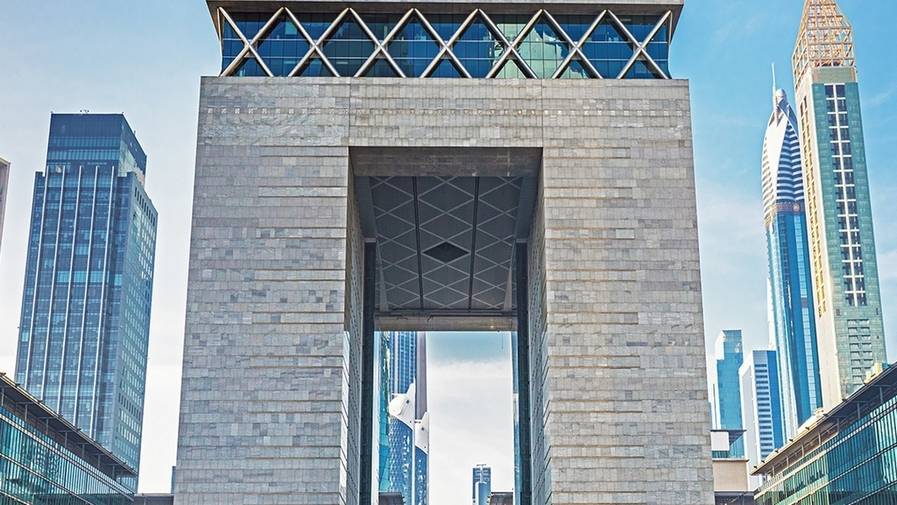
Dubai International Financial Centre, DIFC, has announced the launch of a new licence for startups, entrepreneurs and technology firms.
The new “Innovation License” will attract new types of businesses to the centre and is a key initiative for the Dubai Future District, which was announced in January 2020, said a DIFC press release on Tuesday.
The new licence will support innovation, creativity and entrepreneurship in the region. Entrepreneurs will grow and scale their business using the DIFC’s independent English Common Law based legal and regulatory framework, world class intellectual property and data protection regime.
Innovation License holders will join the already technology firms in the region’s largest financial free zone with over 2,500 firms and 25,000 professionals.
The new DIFC Innovation Licence comes with subsidised commercial licensing options, starting at $1,500 per year. Businesses will also gain access to DIFC co-working space at attractive rates. Innovation firms can secure up to four visas when renting desk space as well as a 50 per cent subsidy on additional visas.
Salmaan Jaffery, Chief Business Development Officer at DIFC Authority, said that the new DIFC Innovation Licence provides an important springboard for future economy pioneers to establish, upscale and future proof their business within the stable framework of a world leading global financial centre.
“It is an exciting new offering that we hope will attract technology-led, sector agnostic start-ups that will disrupt the technology and financial sectors. These types of businesses have an important role in shaping the economic future of Dubai, UAE and the region. They will be welcomed by members of DIFC’s ecosystem and become a central part of the new Dubai Future District,” he concluded.
Source:https://www.khaleejtimes.com/business/local/new-business-licence-announced-in-dubai

14 Aug
India launches ‘transparent taxation’
At present, only the tax department/officer of the city where the PAN of the taxpayer is registered can scrutinise the tax records.
Indian Prime Minister Narendra Modi on Thursday launched a ‘transparent taxation’ platform, among other schemes, aimed at carrying forward the journey of direct tax reforms.
The move brings into effect faceless assessment of taxpayers, faceless appeals and the Rights’ Charter for taxpayers who would not be harassed or treated with suspicion from here on.
Speaking at the launch of ‘Transparent Taxation Honouring the Honest’, Modi said that India is among a few countries giving such rights and dignity to taxpayers. He said that the charter has been introduced with defined rights and responsibilities. From here on, the income tax department cannot doubt anyone without basis, he added.
Modi believes the structural reforms will add a new dimension, adding that these should be policy-driven and holistic. He cited that technology has changed, allowing for the scrutiny process to be distributed randomly. Furthermore, he said that the tax scrutiny rate was reduced by a fourth in the last few years; in fiscal year, there was only 0.26 per cent scrutiny.
Speaking of the recent measures, he said that nearly 300,000 cases were resolved under the Vivaad Se Vishwas scheme. He also appealed to citizens, sayin that those who are capable of paying taxes but not in the tax net should also voluntarily pay dues.
Even though the new ‘taxpayer’s charter’ is aimed at residents, non-resident Indians (NRIs) also will benefit from this proposal. India now joins countries like the United States and Canada, which have fundamental rights enacted under their income tax laws.
“For NRIs, this means less hassles from the tax bureaucracy; now, the taxpayer will know what to expect from the department. The new tax regime has also expanded the scope of faceless assessment and has done away with territorial jurisdiction while substituting individual discretion with team-based assessment,” said Bal Krishen, chairman of Century Financial.
“Many NRIs face problems due to the arbitrary nature in which some income tax officers behave; the new system will prevent this harassment. Nonetheless, the new system does have some drawbacks. For example, if there are complex international financial transactions, it might be challenging for the taxpayer to explain the transaction in the absence of a face-to-face interaction. Only a qualified tax officer will be able to take a well-informed decision and hopefully the entire department will be trained on these aspects. For the NRI, from an overall perspective, the new system is certainly a step forward.”
Dixit Jain, managing director at The Tax Experts DMCC, said: “A lot of transparency will come as there will be faceless interaction with assessees, which will reduce harassment and fair judgement without any manipulation. It will increase confidence; also, more and more people will file tax returns to contribute to the country.”
Jain added that earlier, a lot of NRIs were afraid to file tax returns as they used to think that if they file, they will get notices from the income tax department and will then have to face unnecessary trouble while dealing with officers.
“The introduction of the ‘No Influence’ policy and no face-to-face interaction will encourage NRIs to happily declare their eligible income and pay taxes or claim refunds without any worry. It is a brilliant move by the Modi government to encourage more people to file tax returns so it can contribute to the Indian economy.”
The launch of the Transparent taxation – honouring the honest is based on easing compliance for all taxpayers, more specifically for NRI’s – and is a welcome initiative. Few reforms were already in practice with most of the notice and assessments being conducted under e-proceedings, says Dubai-based Kinjal Bagadia Mehta, chartered accountant and tax consultant.
This initiate will lead to the digitisation of the functioning of the Income Tax department which will eventually eradicate corruption, harassment of the taxpayers and reducing litigation. At present, only the tax department/officer of the city where the PAN of the taxpayer is registered can scrutinise the tax records. By launch of Transparent taxation system, this will change now and with technology, scrutiny will be assigned to tax officers randomly. This will keep changing constantly.
“The idea of honouring honest taxpayers through such a platform will encourage many NRIs to participate in development and growth of India. This will also go a long way in making the tax filing process smoother and easier. A NRI will now be assured of fair, courteous, and rational behaviour from taxman. This people centric and public friendly approach will ease being tax compliant in India ultimately giving confidence to NRIs to file the tax returns, pay tax and also invest in India,” said Mehta.
Source:https://www.khaleejtimes.com/business/global/india-launches-transparent-taxation
