11 Feb
Strict adherence to ESR requirements necessary, experts say
Companies across the UAE need to be up to date and comply with the UAE’s economic substance regulations (ESR) unless they want to incur heavy fines for their failure to comply, experts have said.
In a recent webinar organised by the Dubai Chamber, in collaboration with Al Tamimi & Company, experts highlighted the latest developments and provided guidance with respect to the economic substance regime and compliance requirements. The webinar, titled ‘Key Aspects of Economic Substance Regulations’, noted that the UAE has issued the Economic Substance Regulations in April 2019 and followed them with an updated guidance on relevant activities by the Ministry of Finance to help businesses to demonstrate economic presence in the UAE.
The UAE adopted new economic substance regulations in Cabinet Resolution No. 31 of 2019. These regulations provide that a company engaged in one of a number of specified sectors must have sufficient economic substance in the territory to access the territory’s tax regime. The changes were in response to pressure from the EU on a number of territories, following recommendations from its EU Code of Conduct Group, and apply for financial years starting on or after January 1, 2019. The key activities identified by the European Commission Code of Conduct Group are: banking, insurance, fund management, financing and leasing, shipping, intellectual property, collective investment vehicles, and holding companies that generate income from any of these key activities.
Shiraz Khan, head of Taxation at Al Tamimi & Company, said that tax is a key revenue generation for many countries that don’t have an abundance of natural resources. “These countries generally rely on taxes to fund their public expenditure.”
One of the biggest concerns during the 2008 downturn, he said, revolved around tax evasion. “Many international companies around the world, with the advent of globalisation, were essentially operating in multiple countries and moving money from high tax jurisdictions into low tax jurisdictions and therefore paying less tax as a result.”
The UAE Ministry of Finance (MoF) in August 2020 announced the details of the Cabinet Resolution No. (57) of 2020 concerning Economic Substance Regulations. The Resolution was issued in consultation with the Organisation for Economic Cooperation and Development (OECD) and the European Union Code of Conduct Group, in order to direct companies that engage in one or more relevant activities. The resolution amended and repealed the Cabinet of Ministers Resolution No. (31) of 2019 concerning Economic Substance. Under the resolution, the UAE Federal Tax Authority (FTA) was appointed as the National Assessing Authority for the purposes of the UAE Economic Substance Regulations.
According to the resolution, the definition of a Licensee was amended to be limited to juridical persons and unincorporated partnerships that are registered (whether by way of commercial/trade license or other form of permit) to carry out a Relevant Activity. Natural persons, sole proprietorships and other business forms that are not juridical entities are no longer within the scope of the UAE economic substance regulations.
Noff Al-Khafaji, senior associate, Corporate Structuring at Al Tamimi & Company, noted that the UAE Ministry of Finance, in May 2020, issued a Covid-19 advisory extending the notification filing deadline and consideration of the impact of the pandemic on businesses. In January 2021, the MoF announced that the December 31, 2020 filing deadline for ESR notification and report (if applicable) was extended to January 31, 2020. Failure to provide notification and any relevant information or documentation will result in a Dh20,000 fine, she said. Also, providing inaccurate information will result in a Dh50,000 fine. Failure to submit an ES report can result in a fine of Dh50,000 in the first year, and a fine of Dh400,000 in the second consecutive year of failure.
Source:https://www.khaleejtimes.com/business/local/strict-adherence-to-esr-requirements-necessary-experts-say
03 Feb
SRTI Park, Emirates Development Bank collaborate to support SMEs
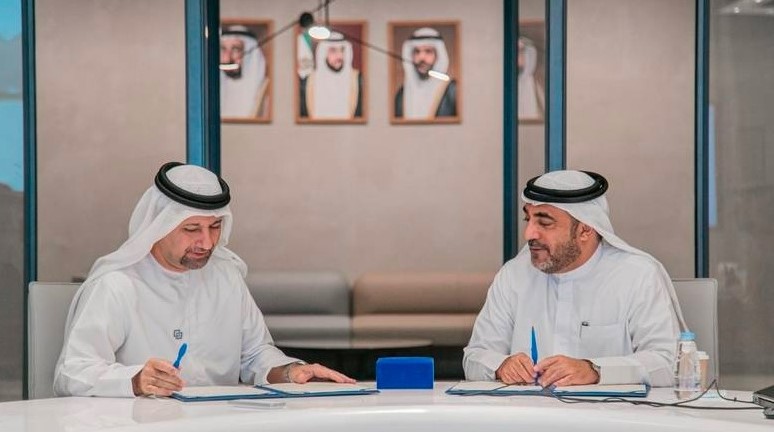
The Sharjah Research Technology and Innovation Park (SRTI Park) has signed a Memorandum of Understanding (MoU) with Emirates Development Bank to support innovative small and medium-size enterprises (SMEs) in the UAE.
The MoU is to represent the Mohammed Bin Rashid Innovation Fund (MBRIF), the operator of MBRIF programmes, to enhance financing of SMEs operating in various fields of technological solutions, Artificial Intelligence, and innovation.
The MoU was signed by Hussain Al Mahmoudi, CEO of SRTI Park, and Faisal Al Bastaki, CEO of Emirates Development Bank, in the presence of MBRIF Director Shaker Farid Zainal and a number of senior officials from both sides.
Under the agreement, the two parties will work to promote the growth of various technology sectors operating inside the SRTI Park, with special focus on water technology, environmental technology, renewable energy, transportation technology, information technology, industrial design and architecture, and other enterprises that promote innovation.
The fund supports companies that offer unique and innovative ideas at national and international levels. The aim of the agreement is to activate the fund’s role in supporting the UAE’s transition to a knowledge-based economy, thus achieving prosperity and sustainability for the country.
SRTI Park CEO Hussain Al Mahmoudi, said: “We are happy with this cooperation with Emirates Development Bank, which will have a clear impact in encouraging small and innovative investors to motivate and translate their creative ideas into successful ventures. The MoU will facilitate funding to finance their projects and help turn their ideas from concept to reality. We are also proud to continue with our mission to intensify efforts and make SRTI Park an important hub of regional and international development for future technologies. Our role is to link the efforts of the private sector, governmental bodies, and academic institutions to support scientific, applied and technological research to carry out investment activities and realise the UAE’s vision of a knowledge-based economy.”
Fatima Alnaqbi, chief innovation officer, MBRIF Representative of the Ministry of Finance, said: “The UAE is a nation built on innovation and entrepreneurship. Our government has built a strong hub for entrepreneurs by creating a start-up ecosystem that attracts innovative individuals from around the world, as well as nurturing homegrown entrepreneurs and businesses. This supportive environment has enabled the UAE rise within the global tech start-up ecosystem, and have set the UAE on a unique path of innovation and exploration, powered by human potential.”
Commenting on the strategic partnership, Faisal Al Bastaki, CEO of Emirates Development Bank, said: “We are proud to partner with SRTI Park to support innovative, technology-powered companies in the UAE. SMEs are at the core of the UAE’s economic growth and development, and through our collaboration, we aim to further contribute to the country’s innovation ecosystem, which is critical to the success of the SME sector.”
Source:https://www.khaleejtimes.com/business/local/srti-park-emirates-development-bank-collaborate-to-support-smes

27 Jan
UAE: New debt policy to stimulate financial sector
The introduction of the securities should begin the development of a secondary market for local currency debt.
The public debt strategy unveiled by the UAE on Sunday will have a significant impact on elevating the nation’s global competitiveness standing and improving macroeconomic management, said Sheikh Hamdan bin Rashid Al Maktoum, Deputy Ruler of Dubai, and Minister of Finance.
Sheikh Hamdan said on Monday that the debt strategy, which seeks to develop the UAE’s market for local currency bonds, would stimulate the country’s financial and banking sector; provide financing alternatives for government development projects; and establish a bond market in the local currency.
“The strategy supports the UAE’s efforts to attain a competitive economy, and enhance financial planning for the federal government,” said Sheikh Hamdan.
He said the move also helps lay the foundations for public debt operations management, and achieve financial sustainability – by enhancing investor confidence in the national economy.
“This contributes to strengthening the country’s standing in global competitiveness indices to be the best country in the world by the UAE Centennial 2071,” Sheikh Hamdan said.
The UAE government does not currently issue debt, but individual emirates do tap bond markets. Over the past two years, the federal government has been putting the infrastructure in place to issue debt denominated in dirhams.
A Public Debt Law allowing the issuance of federal bonds was passed in 2018. In December, the Central Bank of the UAE said it would begin issuing dirham-denominated securities known as M-Bills in January.
Global ratings agency S&P Global said that the introduction of the securities should begin the development of a secondary market for local currency debt, which could result in the creation of a risk-free pricing benchmark for dirham-denominated debt over the longer term.
According to debt market experts, a local currency bond market goes a long way in strengthening the UAE’s financial markets, increasing monetary policy options and attracting longer term portfolio flows, all of which support the very important efforts to mobilise private capital and build a more resilient and diversified economy.
Source:https://www.khaleejtimes.com/business/uae-new-debt-policy-to-stimulate-financial-sector
23 Jan
Asian stocks set for strong start after day of gains on Wall Street
The Biden administration is expected to push through a nearly $2 trillion US fiscal stimulus plan.
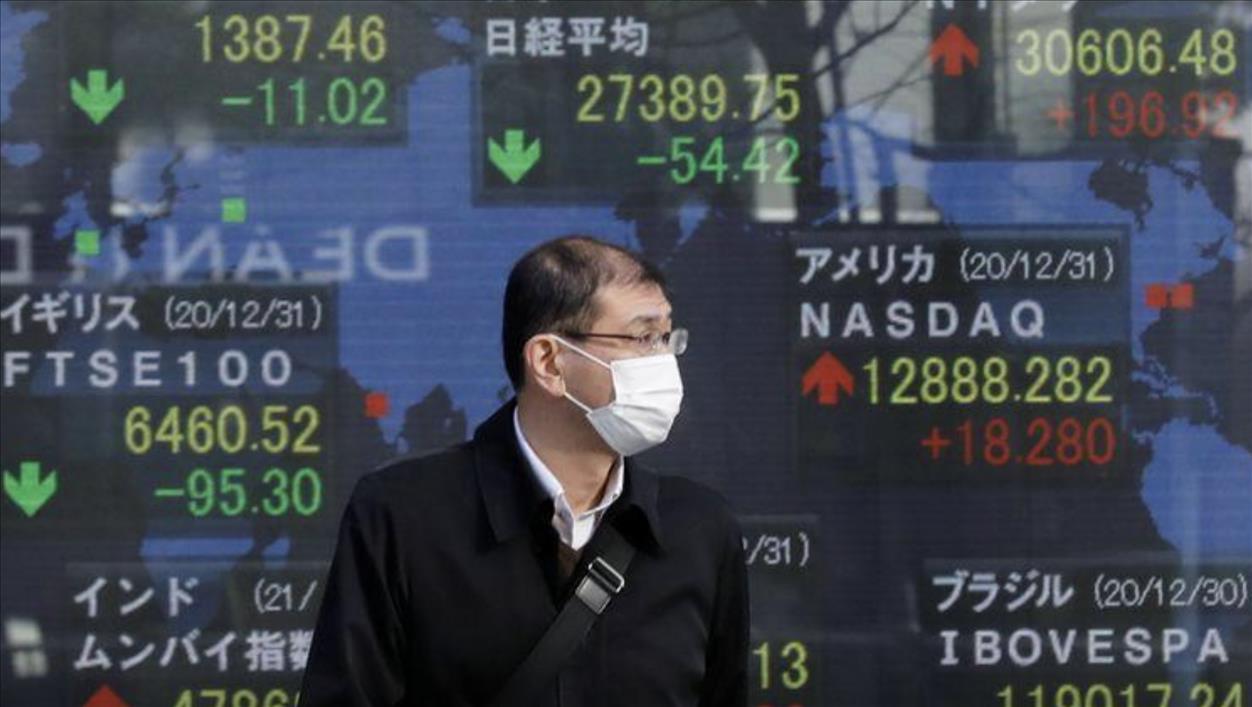
Asian markets were set to rise on Thursday after US stocks closed at record highs on hopes that newly inaugurated US President Joe Biden would put in place further economic stimulus to offset damage wreaked by the Covid-19 pandemic.
“Asian stocks are primed to follow their US peers higher on optimism that US federal spending will revive growth and corporate earnings,” said Ryan Felsman, a senior economist at CommSec in Sydney. “That’s all pointing to a positive day in Asia.”
The Biden administration is expected to push through a nearly $2 trillion US fiscal stimulus plan.
Felsman said tech stocks in Asia may also rise in response to positive news from Netflix Inc, whose shares surged 16.85 per cent after the company said it would no longer need to borrow billions of dollars to finance its TV shows and movies.
MSCI’s gauge of stocks across the globe gained 0.07 per cent.
Australia’s ASX 200 jumped more than 0.80 per cent in early trade Thursday.
Hong Kong’s Hang Seng index futures rose 0.23 per cent.
The Nikkei 225 index closed down 0.38 per cent on Wednesday, and the futures contract is up 0.74 per cent from that close.
Along with Netflix, the rest of the FAANG group, scheduled to report results in the coming weeks, jumped. Google parent Alphabet Inc rose 5.36 per cent.
The dollar fell against most currencies on Wednesday, as investors’ risk appetite held up.
Oil prices rose on the hopes that Biden delivers on the economic stimulus, a move that will increase demand for oil.
US Treasuries did not move much on Wednesday, with the market looking past the inauguration at this point.
Source:https://www.khaleejtimes.com/business/markets/asian-stocks-set-for-strong-start-after-day-of-gains-on-wall-street
