
21 Aug
New Indian income tax rule: PAN card now mandatory for certain cash deposits, withdrawals
Dubai: After the Indian government amended cash limit rules earlier this year, it also made PAN or Aadhaar number mandatory for certain cash deposits and withdrawals. But does this apply to NRIs?
India’s Central Board of Direct Taxes (CBDT) issued a notification that cash deposits and withdrawals in a financial year of over Rs2 million (Dh93,041) when opening of current account or cash credit account with a bank, requires all Indians to furnish PAN or Aadhaar.
(A Permanent Account Number or PAN card, issued by the Indian Income Tax Department, and an Aadhar, a government-issued 12 digit identification number, are two ID documents assigned to each Indian citizen who either resides or looks to reside in India, while transacting amounts in Indian rupees.)
What does the statement mean and what has changed?
As per the notification, ‘every person, at the time of entering into a transaction [must] quote his permanent account number (PAN) or Aadhaar number and every person, who receives such documents, shall ensure that the said number has been duly quoted and authenticated’.
What this means is that prior to this government alert, your bank was already required to ensure that such transactions have PAN. But now your bank will be required to keep the PAN in the bank’s records and inform the same to the Income tax department regarding such financial transactions.
Earlier, as per income tax norms, PAN was mandatorily required in case of cash deposit exceeding Rs50,000 (Dh2,325) in a single day, but no annual aggregate limit for cash deposits was given before. While there was no limit for cash withdrawal, which has been prescribed now.
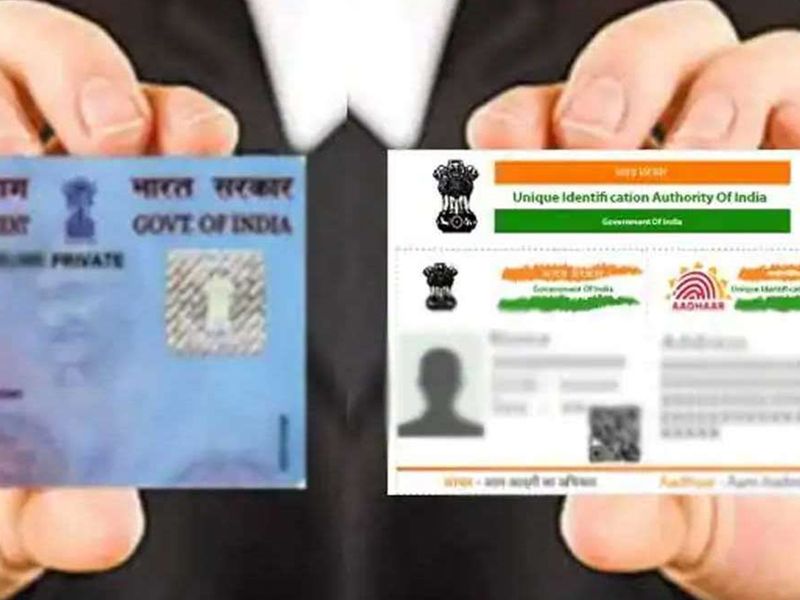
What if one does not furnish or have PAN? Are there fines?
The notification specifies how ‘every person’ making a cash deposit and withdrawal aggregating to Rs2 million (Dh93,041) or more in the financial year in one or more bank accounts are to reveal their PAN.
If not, he or she would not be able to perform such transactions. Paying or receiving cash above the limits set is also punishable by a steep penalty of up to 100 per cent of the amount paid or received.
Individuals who do not have a PAN need to apply for a PAN at least seven days before entering any transaction of above Rs50,000 (Dh2,325) a day or above Rs2 million (Dh93,041) a financial year.
Why did the changes come into effect? Are there more changes?
The Income Tax department, along with other central government departments, has been updating and amending rules to reduce the risk of financial fraud, illicit money transactions and other money crimes over the past few years, and tax experts suggest this move in line with this.
“The government also monitors receiving cash worth more than Rs200,000 (Dh9,303) to restrict the use of cash in high-value transactions. So, a person cannot accept more than Rs200,000 (Dh9,303) in cash, not even from close family,” said an independent tax consultant Brijesh Meti based in India.
Since the rules are applicable since May 26, experts also opine how authorities may need to clarify whether the transactions are undertaken prior to May 26, shall be considered for computing the aggregate value of Rs2 million (Dh93,041) for this financial year or not.

Does this apply to Non-Resident Indian (NRI) transactions?
While PAN may be required, this rule doesn’t apply to NRIs when it comes to having Aadhar, clarified Dixit Jain, Managing Director at The Tax Experts DMCC.
“It is not mandatory for NRIs, as NRIs are not mandatorily required to have an Aadhar card, even though they can easily apply for one when they come to India,” Dixit Jain added. “However, PAN may be required.”
In other words, more than this rule change impacting NRIs who would have already added PAN details to their bank accounts, as initially required by banks, it is aimed at getting banks to keep the PAN on record, and not seek PAN with each transaction, and officially declare any withdrawals over Rs2 million.
“India’s income tax laws prohibit cash transactions above Rs200,000 (Dh9,303), which is also the limit when accepting donations from a single person on a single occasion,” Meti added. “Those who accept hard cash over this amount violating this clause may face a penalty equivalent to the amount received.”
“In a property transaction, the maximum hard cash allowed is also Rs20,000 (about Dh1,000). The limit remains the same even if a property seller accepts an advance.”
Source:https://gulfnews.com/your-money/taxation/new-indian-income-tax-rule-pan-card-now-mandatory-for-certain-cash-deposits-withdrawals-1.1660917543823

01 Aug
Large groups can set up a tax group to minimise their compliance cost
As required by International Financial Reporting Standards (IFRS), groups are required to prepare consolidated financial statements where inter companies’ transactions are eliminated, and losses of one entity are adjusted against the profits of the other entities
Large businesses are structured as a group for better management and reporting purposes. Moreover, companies wanted to enjoy the tax benefits and reliefs which are generally available to the groups, so this is another reason that large businesses are organized in the form of groups. Tax planning and minimising the compliance cost are other critical factors for which large entities assemble themselves as a group.
As required by International Financial Reporting Standards (IFRS), groups are required to prepare consolidated financial statements where inter companies’ transactions are eliminated, and losses of one entity are adjusted against the profits of the other entities. The net profits of the groups are adjusted to arrive at the taxable profits of the group.
Keeping in view the above factors, tax grouping has been proposed in the Corporate Tax Public Consultation Document, which suggests that eligible businesses would be able to create the tax groups and transfer their losses between group companies that are seventy-five per cent or more commonly owned.
It has been proposed in the document that the group of companies which are residents of the UAE and whose ninety-five per cent shares and voting rights are held by the parent company can form a tax group. In addition, a subsidiary can also be part of the tax group if it is owned indirectly by the parent company and other subsidiaries own at least ninety-five per cent of its shares. The branch of a parent company or group subsidiary company can also be a part of the tax group.
To form a tax group, it is compulsory that neither the parent company nor any of the subsidiaries can be an exempt person or a free zone person that benefits from the zero per cent corporate rate, and all group members must use the same financial year.
Based on the above-proposed requirements, the following businesses cannot be part of the tax group:
• Non-resident companies
• Companies which are in the free zones and enjoying zero per cent corporate tax
• Entities in which the parent company or other group companies are not holding at least ninety-five per cent shares and voting rights.
• The companies which have different financial years.
The group will be formed with the mutual consent of all entities, and the entities that want to be part of the tax group will submit a notice signed by all relevant entities to the Federal Tax Authority (FTA). The FTA will review the application and, upon satisfaction of the criteria, will process the application by issuing one tax number to the tax group.
The tax group will be considered a single entity for corporate tax purposes, and the parent entity will be liable to prepare consolidated financial statements. While consolidating the financials, the transactions between the group entities will be eliminated, and the losses of one entity will be adjusted against the profits of other group entities/entities.
The group entities that do not meet ninety-five per cent ownership criteria or the entities that meet the criteria but do not want to be part of the tax group, such entities can still transfer their losses from one group company to another group company, provided certain conditions are met. As discussed in our previous article, the tax losses of one group company can be adjusted against the seventy-five per cent of taxable income of other group companies that would be receiving the losses. Moreover, the group companies that are exempt or subject to a zero per cent corporate tax regime, would not be allowed to transfer their losses against the profits of other group companies.
The parent entity would be responsible for the administration and the payment of corporate tax on behalf of the tax group, and where the parent defaults, then each member of the tax group will be jointly and severally responsible for the payment of corporate tax. This joint and several liabilities can be limited to the specific members of the group with the approval of the FTA.
The large groups should check the ownership of the group entities and the status of their tax residency. If the entities are eligible to be elected to the tax group, then business owners should align their tax years so that the entities can be added to the tax group to minimise the tax impact and reduce the administration cost. Where the businesses are finding any difficulties in assessing the eligibility of the entities to be added in the tax groups, they should take professional advice for better planning.
Source:https://www.khaleejtimes.com/business/large-groups-can-set-up-a-tax-group-to-minimise-their-compliance-cost

30 Jul
UAE to see increased demand for BNPL services
Online shoppers increasingly opting for Buy Now Pay Later (BNPL) services when purchasing various products and services
Consumer appeal, accessibility, and the assurance of no interest or fees – as long as payments are made on time – have been the main driving forces behind the growth of Buy Now Pay Later (BNPL) services across the UAE and MENA region, experts have said.
Nick Curran, head of Endava in the Middle East, and North Africa, says that BNPL has become one of the most prominent retail trends due to the effects of the Covid-19 pandemic and the exponential growth of e-commerce.
Consumer appeal, accessibility, and the assurance of no interest or fees – as long as payments are made on time – have been the main driving forces behind the growth of Buy Now Pay Later (BNPL) services across the UAE and MENA region, experts have said.
Nick Curran, head of Endava in the Middle East, and North Africa, says that BNPL has become one of the most prominent retail trends due to the effects of the Covid-19 pandemic and the exponential growth of e-commerce.
Curran says that BNPL is well-liked among all demographics for many reasons, but it is particularly well-liked among millennial and Gen Z customers as a tool for financial empowerment. “Customers benefit from rapid gratification, a flexible return policy, easy access to credit, and the ability to manage their finances by spreading the cost of purchases over a predetermined time frame.”
For retailers, he noted that BNPL boosts sales, adds stickiness, and lowers basket abandonment without risk. BNPL providers pay retailers upfront and lend money to customers while taking on all of the program’s administrative costs and credit risk. “Aside from the fact that embracing BNPL can improve sales, the appeal is that it can be used for much more than just payments. BNPL firms have vast amounts of data that retailers can use to enhance customer loyalty by offering more targeted products.”
Looking ahead, he said that BNPL will continue to grow across various industries, including banking, luxury retail, travel, hospitality, insurance, trading, and healthcare. This is because the ecosystem is becoming more saturated with big banks, payment schemes, and new entrants vying for a market share. The introduction of banks into the BNPL market is another trend poised to disrupt the industry. BNPL lenders are stealing a portion of banks’ credit card and consumer loan revenue.
“The time is right for banks to enter the BNPL market; nevertheless, having the correct market entry strategy and business model is critical to succeeding,” Curran noted. “Banks are experienced in regulatory compliance and credit underwriting and have the data and client base to compete in this market. Banks are also well-positioned to ascertain affordability and can tailor BNPL offers based on a customer’s risk profile using financial data. However, they must move quickly or risk missing the boat.”
Furthermore, as BNPL players scale and enhance engagement, Curran says that consumers can expect to see super apps that combine retail, financing, payments, and banking offerings. Globally, Klarna, Affirm, and PayPal have already jumped in with their super apps. Super apps distinguish themselves by providing an integrated, fluid, and efficient experience without the need to transition between applications. As competition intensifies, these solutions will become a significant differentiator in the BNPL market.
Security has to be ‘top of agenda’
Saeed Ahmad, managing director, Middle East and North Africa, Callsign, cautioned that as the BNPL industry grows and providers increase their capabilities, it is expected to become a more attractive target for fraudsters.
“While the financial repercussions are troubling, the long-term consequences are far more concerning,” he said. “Fraud undermines consumer trust and, as a result, the long-term potential of the BNPL ecosystem. The most prevalent way users have been victimized by fraud is through the creation of a false BNPL account using stolen card information and identities. Due to the fact that consumers are not invoiced billed immediately, it may take a while for the victim to realise they’ve been targeted.”
Another tactic frequently used by fraudsters are account takeovers, in which they hack into a legitimate user’s account to order items. The dangers are heightened for retailers and BNPL as they are typically held accountable for BNPL fraud consequences. Retailers and BNPL providers are often left to bear the consequences of fraud and repossession, while the fraudsters receive items they have not paid for. Furthermore, because BNPL providers have partnered with various mainstream retailers, consumers often open multiple BNPL accounts. This broadens the field for fraudsters. Account takeover or credential theft is a common precursor to BNPL fraud.
Ahmad says that cconsumers should be cautious of responding to SMS text messages or emails claiming to be from their favourite stores, as they may contain links that lure them to disclose personal information.
“These ‘Phishing’ attacks are frequently the first tool in a fraudster’s toolbox when conducting BNPL and other forms of fraud,” he said. “Consumers who use the same password for all their BNPL accounts are more vulnerable to BNPL fraud. As a result, to decrease the possibility of ATO fraud, consumers should use different passwords for their BNPL services.”
“Along with raising customer awareness of security best practices, BNPL providers need to improve their knowledge of each user interaction’s associated identification and how much trust can be placed in it,” he added. “Layering in approaches such as device fingerprinting, behavioral biometrics, and location analysis helps to build a more comprehensive understanding of the risk level associated with each user. BNPL providers can make more informed and precise decisions throughout onboarding, login, and payment by having a better grasp of users’ digital identities. Apart from preventing fraud, this can also help reduce false decline rates.”
Source: https://www.khaleejtimes.com/tech/uae-to-see-increased-demand-for-bnpl-services?_refresh=true

24 Jun
UAE Corporate Tax: ‘Cross charge’ is an area that will need additional inputs
Businesses await for more insights into how taxes apply on these services
Many corporate groups operate through multiple entities, at times involving more than one tax jurisdiction or in some instances between free zones and the mainland. It is not cost-effective to have teams for various support functions in each entity of the group.
A group operating in multiple countries will have a single team providing IT support to the group. Functions such as legal, accounting, finance, HR, payables, and R&D are usually centralized. The entity providing support services is referred to as a ‘service center’, and the entity availing the services as ‘service recipient’.
‘Cross charge’ is a mechanism whereby the costs incurred by the service center are recovered from the service recipient, generally based on an allocation key. In the case of IT support services, the costs incurred by the service center (hardware, software, and employee costs) may be allocated to other entities based on the number of tickets created. Similarly, costs incurred on the legal function may be allocated based on the time devoted by the legal team, or the costs incurred on the accounting function may be recovered based on the number of accounting entries passed.
Having appropriate allocation keys is critical. Commonly, headcount, area occupied, and revenue are used as allocation keys. Cross charges are subjected to an audit by tax authorities of both locations – i.e., the country/free zone of the service center and the country of the service recipient, especially under Transfer Pricing regulations.
In the country of the service center, the tax authorities will scrutinize whether appropriate profits have been earned and offered to tax by the service center. The arms’ length test is applied in such a case, whereby the tax authorities seek to compare the profits earned by the service center with those earned by other third-party service providers engaged in providing similar services.
‘Arm’s length’ approach
Essentially, it is verified as to whether the service centers have recovered the full costs, plus an appropriate markup from the associated enterprises, after taking into consideration factors such as nature of services, functions performed, assets utilized, risks assumed, the extent of involvement by the associated enterprises. Where the profits are not at an arms’ length, a Transfer Pricing adjustment is made, whereby profits equivalent to arms’ length profit are subjected to tax.
In the country in which the service recipient is based, the payments made to the service center are subjected to the benefits test and the arms’ length test by tax authorities. Under the benefits test, the authorities verify whether the service recipient has actually availed and benefited from the services provided by the service center. A deduction from profits of the payments made to the service center is allowed by the tax authorities only to the extent the benefits have been availed.
Master service agreements
The service recipient generally proves benefits availed either as cost savings or increase in revenues. If the payments are found to be in excess, a Transfer Pricing adjustment is made, whereby the excess payments made are disallowed as a deduction from profits and subjected to tax.
Tax authorities perceive payments of shared service center costs/group costs as ‘repatriation of profits’ or excessive arms’ length price, hence the need to defend with facts and documentation when asked to do so.
The UAE would grant credits if a tax were deducted in an overseas jurisdiction. The OECD has encouraged countries to levy a withholding tax only on the profit element in the cross charges.
Considering the overall tax litigation risk involved in case of cross-charges, overseas or between free zones/mainland entities, it is necessary for organizations to have a robust pricing policy in place. A ‘Master Service Agreement’ or separate agreements should be entered into between the service center and service recipients.
A regular study should be undertaken to test compliance of the pricing policy with the arms’ length principle. This shall help organizations to defend and mitigate litigation risk. In certain cases, where complex issues like IP development or marketing intangibles are involved, organizations may also consider obtaining clarification from the Federal Tax authority once the rules are known.
Source:https://gulfnews.com/business/analysis/uae-corporate-tax-cross-charge-is-an-area-that-will-need-additional-inputs-1.1655988316070
