
27 Mar
Penalty Reconsideration in UAE VAT
Penalty Reconsideration – UAE VAT
Reconsideration is the way to approach authority if you are not satisfied with the penalty decision issued by the authority. It is a request application that can be submitted by a Registrant/Non-registrant or tax agent after preparing a proper case study that produces evidence justifying the reason.
The authority appoints a represented member to review each application if there is any additional documents/clarification required from the applicant. The appointed member will approach the applicant by communication channels i.e. email/phone.
Based on our experience, for the last 2 years we have submitted more than 100 applications, we observed and learned that if the application is properly explained and submitted with additional supporting documents(Only in Arabic). The authority is reviewing the application and providing a waiver of penalties.
Who can submit a reconsideration application?
The application can be submitted by a Registrant/ Non-registrant and Tax Agent, who are not satisfied with the authority penalty decision. The application can submit by using an online FTA portal.
When do we need to submit a reconsideration application?
As per Article-27 of Federal Law No. (7) Of 2017 on Tax Procedures, the application must be submitted within 20 business days from the applicant being notified of the decision.
How does submit an application?
The application can be submitted by using an online FTA portal. The application is only acceptable in the Arabic language.
What are the reasons where authority will not look into your application?
As per Article-26 clause (4) of Cabinet Decision No. (36) of 2017 on the Executive Regulation of Federal Law No. (7) of 2017 on Tax Procedures. There are mainly 2 reasons:-
- Insufficiency of Funds
- Reliance on another person
In the above two cases, the authority will not look into your application.
What are the documents required to submit the application?
There are the following documents require:-
- Authorized Signatory Passport copy
- Authorized signatory Emirates ID Copy
- Authorization proof i.e. MOA/POA etc.
- A case study letter with supporting documents
How authority will approach after submission of reconsideration?
The Authority shall review a request for reconsideration if it has fulfilled the requirements and issue. Its justified decision within 20 business days from receipt of such application. The Authority shall inform the applicant of its decision within five business days as of the issuance thereof.
What if the authority approves the application?
In the case of application is approved by the authority, the penalty amount will be reverse on applicant FTA “VAT Transaction” ledger and the applicant will receive a confirmation email from authority.
What if the authority rejects the application?
If authority is not satisfied with your request application. The applicant can approach to “Tax Disputes Resolution Committee”.
What if the Tax Committee rejects the application?
If the Tax Committee is rejected the application. The applicant can approach the Court.
Source:https://www.gccfintax.com/articles/penalty-reconsideration-in-uae-vat-1254.asp

16 Mar
Mandatory for auditors to furnish details of tangible and intangible assets
The Ministry of Corporate Affairs has now made it mandatory for auditors to furnish details of tangible and intangible assets belonging to the company.
Question: I had handed over my shares and securities to my broker to cover the cost of any investments which I may make in future. I find that he has used those securities without my consent for trading on his own. I am now finding it difficult to retrieve those shares and securities though he has promised to do so in the near future. I am very much concerned about this misuse done by some brokers. Is the government taking any steps to protect investors from unscrupulous brokers?
The regulator, Securities & Exchange Board of India, has last month issued a directive that brokers can accept collateral from clients in the form of shares and securities solely for the purpose of margin pledge created in the depository system. It has prohibited brokers from making an off-market transfer of shares and securities because such transfers tantamount to change in ownership and cannot be treated as a pledge. It has been further clarified that transfer of securities to the demat account of a broker who may be a trading member or clearing member of a stock exchange is prohibited.
It is also specified in the circular issued by SEBI that brokers should open a separate demat account for accepting ‘margin pledge’. This action has been taken by SEBI to protect the interest of investors like you who have suffered in the past as a result of broking firms illegally pledging shares belonging to their clients with banks and non-banking finance companies to raise money with which the brokers enter into business activities for themselves. In case of defaults made by brokers in the past, they may apply for insolvency, but the clients whose shares have been illegally transferred have been left without recourse and would suffer losses. Therefore, in future, you should specify when you hand over your shares and securities to a broker that these should be used only as ‘margin pledge’ and should be credited by the broker in a separate demat account pertaining to such ‘margin pledge’.
Q: Auditors in the past have been found to be negligent in not reporting financial irregularities committed by companies. Shareholders and investors have therefore suffered and their investments have lost value. This brings no relief to shareholders even if the auditor is debarred from practice. Is anything being done about this?
The Ministry of Corporate Affairs has now made it mandatory for auditors to furnish details of tangible and intangible assets belonging to the company, loans given to promoters and related parties and a report on whistle blower complaints. If there is a discrepancy of more than 10% in inventories, the auditors are required to report this fact in their report to shareholders. If title deeds of immovable properties are not in the name of the company, the auditor would have to report the same.
The auditor of the holding company is required to disclose any adverse remarks which may be made by auditors of the subsidiary companies. He will also be required to give an opinion on financial ratios, the age and expected dates of realisation of financial assets and payment of financial liabilities. To reduce manipulation of books of account, auditors will have to verify whether quarterly statements filed with banks are in agreement with the books of account. Earlier, under the Companies Auditors’ Report Order, 2016, comments had to be given by auditors on 21 issues. This has now been increased to 50 issues under the revised order of 2020.
Q: My son who is working in India is required to travel to some South East Asian countries. I want to know whether any travel policy is available which would cover risks like corona virus?
Most insurance companies are not issuing new policies for travel to China and other South East Asian countries, including Hong Kong and Macau, in the wake of an advisory issued by those Governments. However, some companies like Bajaj Allianz General Insurance Co. Ltd. issue policies through the underwriting process which will be in operation until the advisory is withdrawn. Companies like ICICI Lombard General Insurance Co. Ltd. have retained the option to issue the policy on a case by case basis depending upon the perceived risks. Insurance companies generally assess the situation before issuing a policy, considering the region or area where the travel is to be undertaken.
A multi-trip or annual policy does not require the applicant to give details of his travel in advance. Hence, policies are generally issued. However, at the time of claim, expenses relating to China are rejected on the ground that an advisory has been issued for not travelling to that country. Generally, people are being treated or quarantined at Government facilities. Therefore, the claim for medical expenses would not arise.
Source:https://www.khaleejtimes.com/business/local/mandatory-for-auditors-to-furnish-details-of-tangible-and-intangible-assets
03 Mar
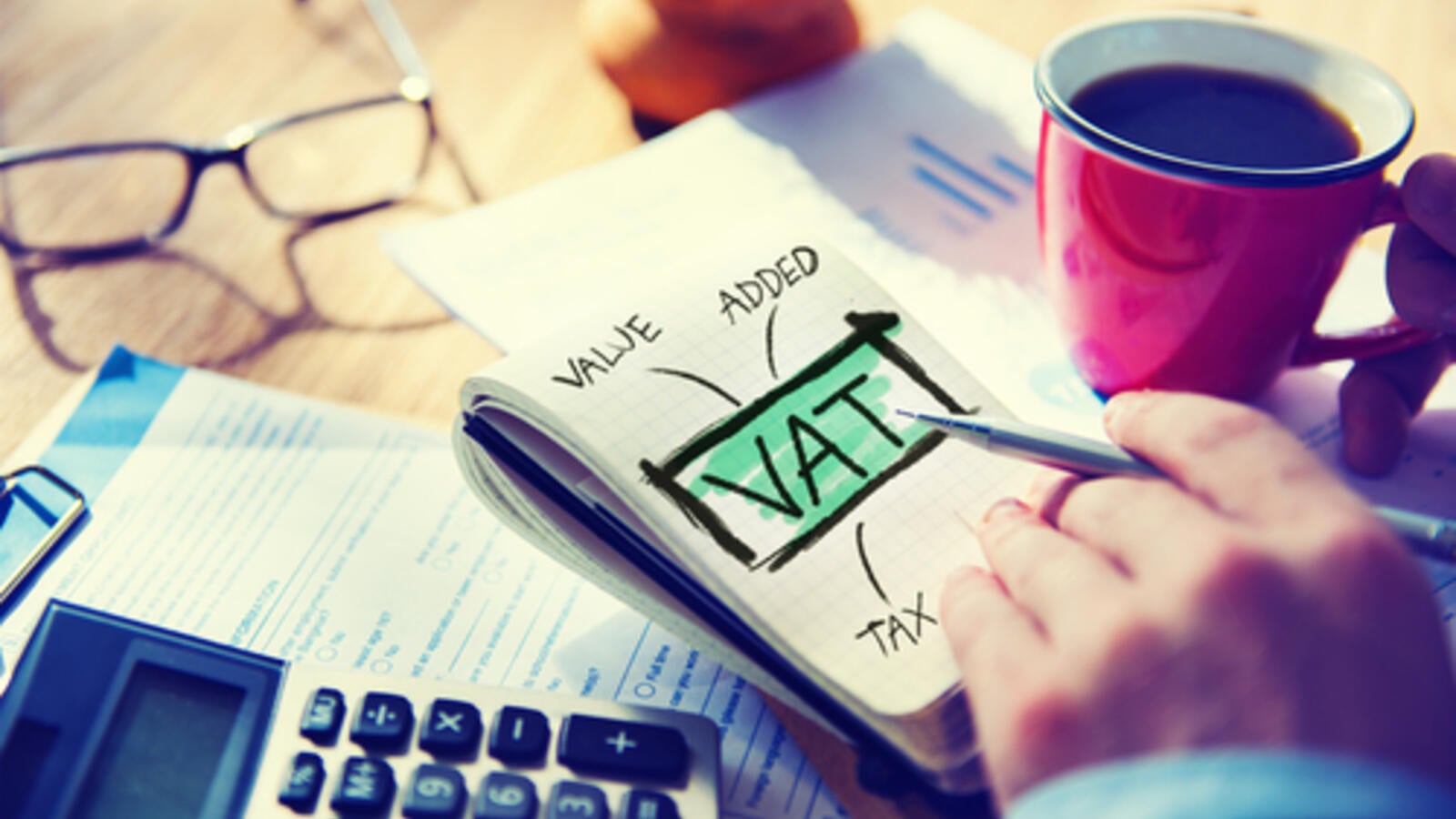
Assessment of VAT impact to take 3-5 years: UAE minister
It will take around three to five years to collect the required data for the assessment of the impact of the Value Added Tax (VAT) on the UAE’s Gross Domestic Product (GDP), according to a UAE minister.
Hamid Obaid Al Tayer, the Minister of State for Financial Affairs and Chairman of the Board of Directors of the Federal Tax Authority (FTA) told members of the Federal National Council (FNC) on Tuesday that it was too early for the government to evaluate the impact of VAT to the country’s economy because of insufficient data.
“It requires a period of three to five years to study the impact of VAT on the impact of the country’s economy,” said Al Tayer. “We need ample time to compile sufficient data to evaluate the effects of the tax. The only study that was conducted in 2018 in just not enough. It’s therefore too early to rely on such data to assess the impact of VAT.”
The minister was responding to a question from Hamad Al Rahoumi, first deputy speaker of the FNC and a member representing Dubai about the effects of VAT on the economy, the consumers and traders two years after its implementation.
A five per cent VAT was introduced in UAE from January 2018 and the impact of the tax is yet to be known.
“There have been many challenges, including the low oil prices, geopolitical factors, sanctions imposed on certain nations and now the coronavirus outbreak. All these factors have to be taken into account when assessing the impact of VAT,” said Al Tayer.
He noted that there was no plan to increase the amount of VAT being charged on goods and services as the International Monetary Fund (IMF) recently recommended.
Last year, the IMF suggested that the VAT should be doubled from five per cent to 10 per cent in Saudi Arabia in consultation with the other Gulf countries.
Al Rahoomi told Khaleej Times on the sidelines of the FNC meeting that he raised the issue following mixed reactions from people about VAT and that it was necessary that the concerned body come up with a comprehensive survey on the effects of this tax and its benefits to the nation.
“VAT and other government fees has led to businesses increase prices of various goods and services thereby affecting consumers,” said Al Rahoomi.
UAE’s GDP to increase in 2020
The state minister also noted that the country’s GDP is expected to increase to Dh1.50 trillion in 2020 from Dh1.46 trillion in 2019, an increase of nearly Dh37 billion.
“Last year, the inflation rate was 1.5 per cent. The GDP in 2018 was Dh1.44 trillion and inflation was 3.69 per cent,” said Al Tayer, adding that the country’s GDP in 2017 was Dh1.41 trillion and the inflation was 1.97 per cent.
In 2016, the GDP was Dh1.41 trillion and the inflation rate was 1.61 per cent.
Al Tayer said the UAE is currently witnessing an increase in investment opportunities, which was reflected in the increase in the number of companies registered under the tax system, which is 312,000 companies.
Source:https://www.khaleejtimes.com/business/banking-finance/assessment-of-vat-impact-to-take-3-5-years-uae-minister

11 Feb
VAT in UAE: Now get refunds at shopping malls, hotels
Kiosks allow tourists to process their requests to recover VAT.
The Value Added Tax (VAT) Recovery Self-Service Kiosks for Tourists scheme has been expanded to be available at major shopping malls and hotels, in addition to the existing ones at air, land and maritime entry and exit ports across the UAE, announced the Federal Tax Authority (FTA).
The expansion aims to provide additional services to tourists, enhancing the UAE’s status as a leading destination on the international tourism map. Planet – the company authorised by the FTA to operate the electronic system for the Tax Refunds for Tourists Scheme – debuted nine self-service kiosks in stage one of implementing the plan, setting them up at multiple shopping malls and hotels. The kiosks are equipped with state-of-the-art technology allowing them to fully process VAT refund requests for tourists.
In a statement issued on Monday, the authority explained that the kiosks allow tourists to process their requests to recover VAT from the convenience of their hotel or at major malls in a matter of minutes.
Applicants can scan their boarding pass to prove they will be leaving the UAE in the next 24 hours, as well as their original passport (or identity card for GCC nationals), and then follow the simple instructions displayed at the self-service kiosks. The FTA revealed that up to 55 new self-service kiosks will be deployed by the end of 2020 – 25 of which would be stationed in malls and 30 in hotels.
Khalid Ali Al Bustani, director-general of the FTA, said: “Our objective from expanding the self-service kiosk is to provide further facilities and additional options for tourists looking to recover taxes. Eligible tourists who meet the necessary criteria for reclaiming the VAT they incurred on their purchases in the UAE can process the refund applications from the convenience of their own hotels or from a list of major shopping malls around the country.”
The number of digital transactions under the Tourists Refunds Scheme grew to 3.2 million in the period between its launch in November 2018 and the end of 2019.
Tourists can submit their requests to recover the taxes they incurred on purchases in the UAE when they are about to depart from the country. Applicants must submit the tax invoices on their purchases, marked with ‘Tax-Free’ stickers issued by retail outlets registered in the system, along with their passport and credit card. No limit is placed on the maximum amount that can be recovered if said amount is transferred to the tourist’s credit card, however, in the event that the applicant requests a cash refund, then the maximum amount is set at Dh7,000 per day. This process can be carried out at self-service kiosks, as well as at tax refund offices located at ports of exit across the UAE.
Source:https://www.khaleejtimes.com/business/vat-in-uae/vat-in-uae-now-get-refunds-at-shopping-malls-hotels
