08 Oct
Indian CAs play key role in supporting the UAE’s banking industry
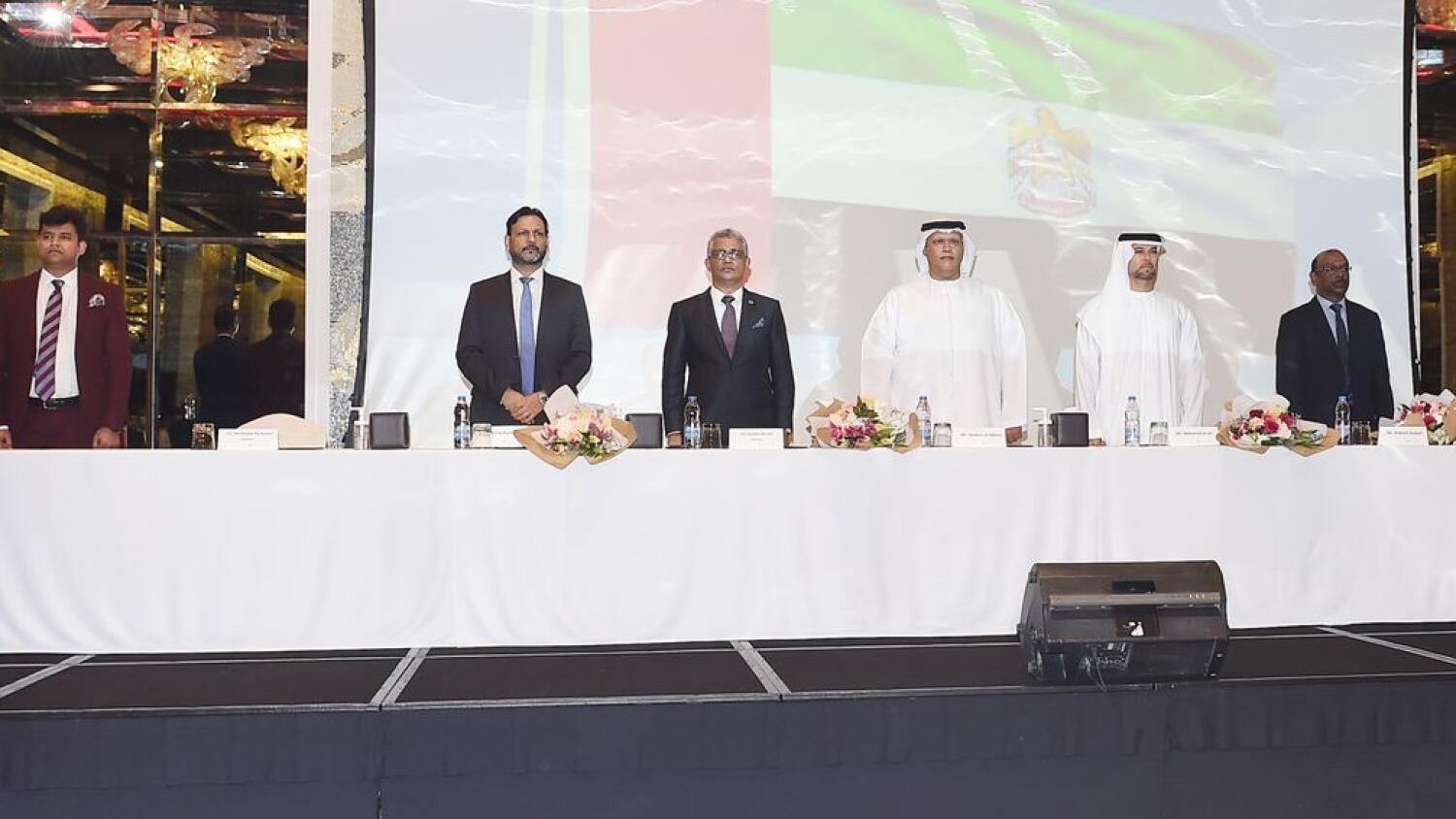
The UAE’s banking system is one of the robust banking systems in the world and the Indian chartered accountants in Dubai have been playing significant role in strengthening the UAE’s banking industry, said experts at ‘The Banking Summit’ organized by ICAI (Dubai) Chapter.
Sunder Nurani, chairman, ICAI (Dubai) Chapter, reminded the members that as guardians of public trust, the chartered accountants should always ensure that their actions as CFOs, financial controllers, accountants and auditors should support the banking system positively as they are involved extensively compiling and auditing of financial statements — one of the criteria for the credit evaluations by the banks.
Nurani also spoke about the brief history of banking sector in the UAE and how the banking sector has evolved over the years with latest series of bank mergers. He briefly touched upon the recent profitable results published by the major banks which portrays continuous recovery of UAE economy from the pandemic.
The guest of honors, who addressed the chartered accountants in the summit include, Ibrahim Al Mheiri, head of Islamic Banking, Mashreq Bank; Mohamed Al Ali, managing director and head of cash management-advisory and solutions corporate institutional banking, FAB; and Nishant Ranjan, chief executive, GCC operations of Bank of Baroda. The guest speakers, who shared their insights and views include, Dhiraj Kunwar, managing director, business banking, RAK Bank; and Kumar Muthiah, divisional head, ADCB Bank Group.
Ibrahim Al Mheiri shared his experience on how the banking sector has changed over years especially after the Covid-19 pandemic. He said the current trends in banking sector are into investing in the technology and how to improve customer experience.
He emphasised that technology continues to find space in the banking sector resulting in continuous shift in the way banks work. He elaborated that SME sector is the backbone of UAE economy and thus is an important sector for the banks.
Mohamed Al Ali shared how the pandemic transformed the way banking works from traditional mode of physical banking to digital era. He congratulated Chartered Accountants for playing an important role in contributing to the UAE economy.
Nishant Ranjan said the EXPO 2020 has started, it’s more appropriate even for banking sector to replicate the theme of the Expo i.e. opportunity, sustainability and mobility which is espoused by the visionary leaders of UAE. He elaborated how banks are focusing on contactless payment solutions, upgrading the ATMs, introducing new customer engagement channels, finding ways of cost optimisation through paperless transactions by using digital footfalls and leveraging the rise in adoption of fintech and digital payments during this pandemic.
The event was also graced by other senior bankers in UAE such as Dhiraj Kunwar who engrossed the audience by sharing how SME banking is going through a transformation in terms of product, technology and risk management. Kumar Muthiah also graced the occasion and lucidly elaborated on how corporates need to conduct banking business and the importance of how smooth conduct of business can move the Bankers to lend against character than collateral.
Anurag Chaturvedi, vice-chairman, ICAI (Dubai) Chapter, mentioned that banking is critical element in unicorn making and credit with financial institutions developed through diligent business with sound and timely financial decision making. Businesses understanding the compliance requirements from banks to avail finances.
Harikishan Rankawat, secretary, ICAI (Dubai) Chapter, highlighted the importance of getting timely banking support for the SME sector in UAE which will enable this segment to reach the next level.
Source:https://www.khaleejtimes.com/finance/indian-cas-play-key-role-in-supporting-the-uaes-banking-industry

11 Apr
UAE anti-money laundering: Registration for non-financial entities, individuals extended until April 30
Decision due to the large numbers of companies in the sector seeking to register in the last days of the previous deadline
The UAE Ministry of Economy announced the extension of the deadline granted to companies in the “specific non-financial business and professions” sector to register in government regulations approved for countering money laundering and combating the financing of terrorism until the end of April.
The decision is due to the large numbers of companies in the sector seeking to register in the last days of the previous deadline, which expired on March 31, taking into account the conditions of companies and the business sector in general during the period of the Covid-19 pandemic.
The ministry explained that the targeted companies, which include brokers and real estate agents, auditors, dealers of precious metals and gemstones, and corporate service providers, are required to undergo registration, which is mandatory and for free, before the end of the new deadline, in the goAML system and the automatic reporting system for sanctions lists and take the necessary measures to achieve complinace with the requirements of Federal Law No.20 of 2018.
It called on the concerned companies to take advantage of the new period for registration to avoid the penalties and fines stipulated in the law, which will be applied from May 1. Fines start from Dh50,000 to reach Dh5 million, while the penalties for companies that fail to register include the suspension of their licences or their closure.
Abdullah Sultan Al Fan Al Shamsi, Assistant Under-secretary for the supervision and follow-up sector at the Ministry of Economy, said: “Due to the increased level of response in the business sector and non-financial professions identified for mandatory registration, the Ministry of Economy decided, in coordination with its partners from the relevant government agencies, to extend the grace period granted to the target companies and give them more time until the end of the current month to complete the registration process and begin taking the necessary legal measures to comply with the requirements of the law and its implementing regulations.”
“The goal is not to impose violations, but to ensure compliance, and the decision comes with the aim of taking into account the conditions that various companies and business sectors are going through as a result of the Covid-19 pandemic and its repercussions on a global scale, stressing that the Ministry of Economy is keen to build a solid and positive relationship with the private sector based on the principle of partnership.”
Al Shamsi emphasised that the designated non-financial business and professions sector is a major partner in the UAE’s efforts to combat money laundering and has a pivotal role in supporting government efforts to build a safe and stable economic environment away from money laundering and terrorist financing crimes.
He pointed out that many of the companies concerned in the sector in its four categories showed a high level of awareness and commitment and registered, but there is still a percentage of companies that have not registered in the two systems. Extending the grace period to gives an additional opportunity to these companies to rush to register, avoid violations and protect their business and investments from money laundering risks by complying with government control requirements.
Safia Al Safi, director of the Anti-Money Laundering Department at the Ministry of Economy, said that extending the grace period without applying any violations before April 30 allows companies fulfill their obligations and initiate registration. The Ministry of Economy received more than 6,000 calls and enquiries during March.
Source:https://www.khaleejtimes.com/business/banking-finance/uae-anti-money-laundering-registration-for-non-financial-entities-individuals-extended-until-april-30

08 Apr
Failure to comply with tax audit to result in hefty fines, tax experts warn
Organisations across the UAE which fail to comply with the rules in place regarding the tax audits conducted by the Federal Tax Authority (FTA) will be liable to pay hefty fines, experts warned at a webinar on Wednesday.
Presented by Khaleej Times & MBG Corporate Services, the event sought to bring clarity to some of the key issues regarding tax audits, and brought together key experts in the field to share their insights.
Vipin Ahuja, director – Tax, MBG Corporate Services, started the event with a presentation on why the Federal Tax Authority is conducting tax audits. He explained that the provisions of the federal law on taxation have mandated the FTA with the legal right to perform a tax audit on any person to determine their compliance with the provisions of the relevant laws. FTA authorities will check the returns and other documents like sales invoices, purchase invoices, Customs & VAT documents related to the import and export of goods and services. The FTA can conduct these for any reason, or whenever they want, as per a set of criteria. It is advisable for all business entities in the UAE to prepare themselves for these tax audits in a timely manner as the FTA allows only five days for responding to their queries.
Under the Self-Assessment System of VAT returns filing, the onus is clearly placed on taxpayers and businesses have to interpret and apply the tax legislation correctly to comply with their respective tax obligations, he explained.
Ahuja also shared probable factors for tax audit selection. “The first has to do with if your company is in a VAT refundable position. Ever audit starts with your risk profile and how your company holds up against the FTA risk profile parameters. If you are in this position, then you will definitely be on the FTA’s radar. Another factor is if you are a large-scale business with high volumes.”
Other reasons include a history of late Return submissions, the occurrence of incorrect filings, a non-reconciliation with Customs Records, delay of payment of Taxes/Penalities, and negative adjustments to imports
Laila Aziki, tax agent, MBG Corporate Services, then revealed that there are several penalties for non-compliance with tax audits. One of the heftiest is a Dh20,000 fine that will be charged for failure to facilitate the work of the tax auditor.
“The submission of an incorrect tax return will result in a penalty of Dh3,000 for the first time, and Dh5,000 for repetition and five per cent, 30 per cent, and 50 per cent based on the time of correction,” she said. “Non-maintenance of any financial records will result in a Dh10,000 penalty; and failure to settle the amount payable as sated in the return will result in a one per cent daily penalty up to 300 per cent when unpaid for one calendar month. This is increased to four per cent due on the seventh day and two per cent due tax immediately.”
Ahuja noted that companies can start their journey towards VAT compliance by ensuring accurate and complete data capture into the system; reconciliation of VAT Returns with Books of Accounts & Custom Records; and the maintenance of all the relevant supporting documents.
Source:https://www.khaleejtimes.com/business/local/failure-to-comply-with-tax-audit-to-result-in-hefty-fines-tax-experts-warn

15 Mar
Oman to levy 5% VAT from next month
It is estimated that VAT will raise around 400 million Omani riyals per year.
Oman will start implementing five per cent value-added tax (VAT) from April 16, Oman News Agency reported on Sunday
It is estimated that VAT will contribute 1.5 per cent towards the country’s gross domestic product (GDP) and raise around 400 million Omani riyals (Dh3.8 billion; $1 billion) per year for the country’s exchequer.
The implementation of VAT comes in line with the GCC framework that was agreed between the six nation bloc. The UAE and Saudi Arabia levied five per cent VAT on January 1, 2018 followed by Bahrain. Saudi Arabia later hiked VAT to 15 per cent amidst shortfall in revenues due to plunge in oil prices.
A study by EY had predicted that the adoption of VAT by GCC countries would generate additional annual revenues of $25 billion.
Saud bin Nasser bin Rashid Al Shukaili, chairman of the Tax Authority in Oman, said all necessary preparations and requirements to implement VAT from April 16 have been completed.
Oman’s tax authority had opened registration process for the companies to register in the special tax system in February last year.
He explained that companies have been given the necessary time to prepare their accounting systems and other measures for tax compliance.
Source:https://www.khaleejtimes.com/business/economy/oman-to-levy-5-vat-from-next-month
